A new nine-foot flood wall designed to safeguard vital airfield lighting systems will help prevent catastrophic storm surges from grounding flights at Tampa International Airport (TPA).
Airport officials recently announced that they were putting the finishing touches on a project that will help mitigate increasingly severe environmental threats. The work enables crews to quickly erect an AquaFence flood barrier system around two electrical vault buildings.
Adjacent to Tampa Fire Rescue’s station near Airside A, the two buildings house vulnerable equipment that powers runway lights. The flood wall will shield the facilities from inundation if a major storm makes landfall in the area.
Losing those systems would have a calamitous effect on airport operations, according to the announcement. Functioning airfield lighting is vital to keeping aircraft moving safely and ensures the region can continue receiving disaster relief and recovery flights in the chaotic aftermath of a storm.
Josh Gillin, senior manager of communications at TPA, noted that “there are currently no plans to incorporate or deploy AquaFence flood barriers elsewhere at Tampa International Airport.”
“This project is specifically focused on protecting critical infrastructure that could be vulnerable to storm surge during a major hurricane,” Gillin told the Tampa Bay Reporter. “As we evaluate the effectiveness and feasibility of this engineering solution, the results will help inform whether there may be opportunities for future applications across the airport.”
Securing the electrical vaults will prevent the multimillion-dollar, time-consuming repairs that inevitably follow saltwater intrusion. The buildings are susceptible to storm surge flooding that typically occurs during a Category 3 or higher hurricane, according to the announcement.
“Tampa International Airport has faced the threats of hurricane season time and again, and the installation of this AquaFence system is a forward-thinking resilience solution to protect some of our most critical assets from storm surge,” said Smitha Radhakrishnan, chief development officer for TPA, in a statement.
“While we hope to avoid the need to deploy this barrier, TPA’s role as vital infrastructure to the Tampa Bay region underscores why we must prioritize our operational resilience from such extreme climatic events.”
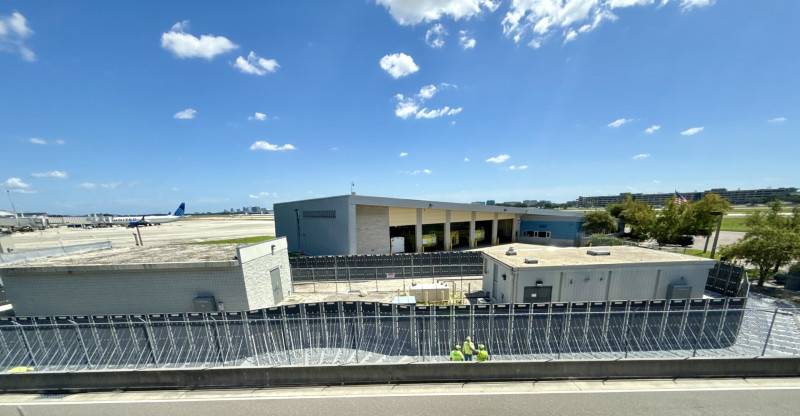
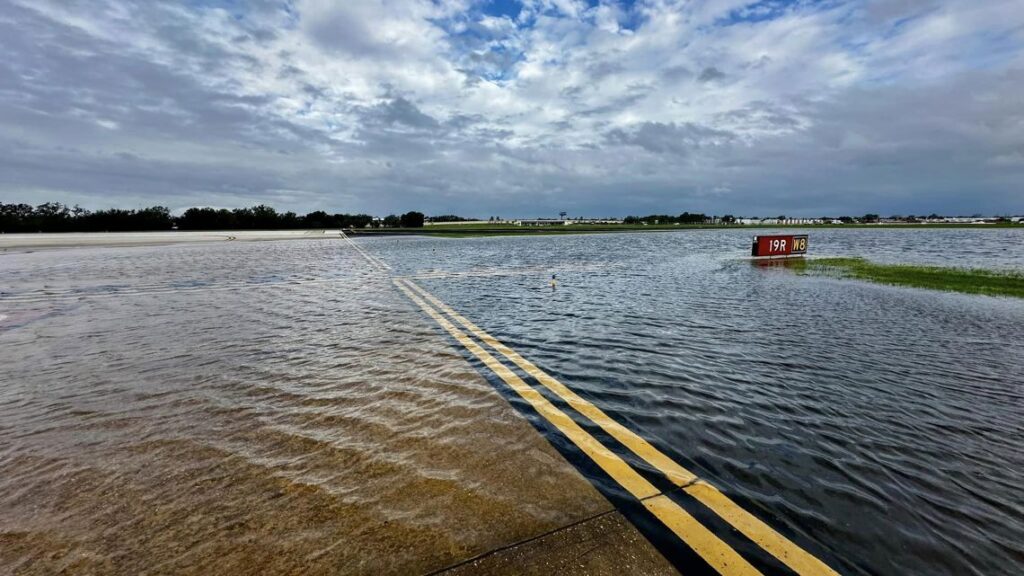
The $1.9 million project includes foundations for the barrier, electrical and drainage improvements, fencing and pumps to divert heavy rainfall away from the protected areas. TPA experienced flooding during Hurricane Milton (Oct. 2024), Hurricane Idalia (Aug. 2023) and a severe rain event in Feb. 2006.
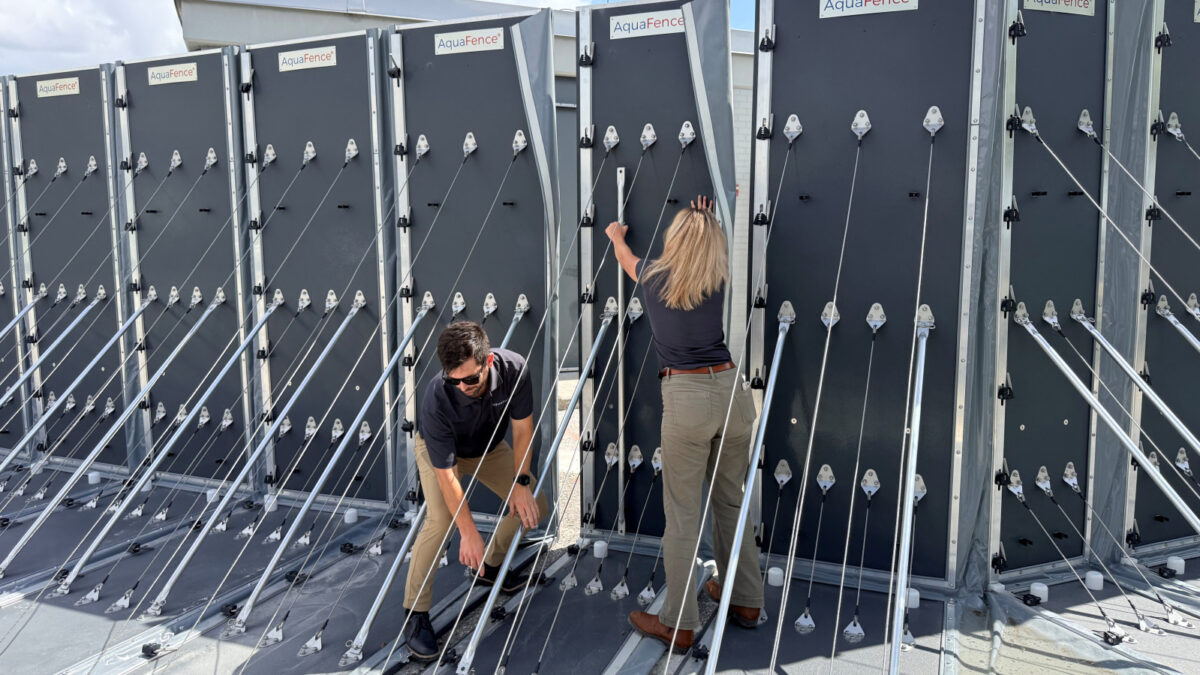
TPA’s new protective system features 150 separate Clima Armour FloodWall panels made of steel, aluminum and laminated plywood. Waterproof, UV-resistant plastic membranes and heavy-duty gaskets tightly seal the nine-foot barrier – the maximum height offered by AquaFence.
The panels snap together securely and strap directly to permanent anchors embedded in the concrete. TPA will store the system until a storm approaches.
A contracted emergency response team will then mobilize and, hopefully, erect the barrier at least 48 hours before severe weather. Patrik Hansson, president of AquaFence, noted that “flood protection should never be reactionary.”
“True resilience comes from understanding your vulnerabilities and putting the right protections in place before a storm is on the horizon,” Hansson added. “Tampa International Airport is demonstrating that foresight … After a major storm, restoring airport operations is vital to regional recovery. This investment adds another layer of protection to help TPA stay operational or quickly get back up and running when the community needs it most.”
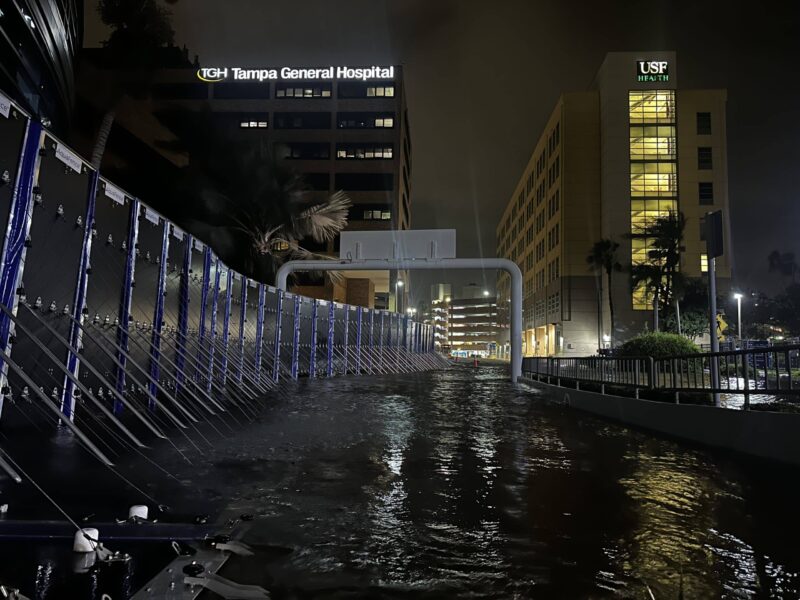
The airport’s purchase is part of a region-wide embrace of the Oslo, Norway-based company. AquaFence made international headlines in September 2024 after viral videos showed its barriers safeguarding Tampa General Hospital from Hurricane Helene’s seven-foot storm surge.
While the surrounding streets of Davis Island succumbed to the bay, the hospital remained dry and continued performing life-saving operations.
That high-stakes success story convinced the City of St. Petersburg to purchase a system in January 2025. Officials will deploy the impermeable barrier around a critical wastewater lift station downtown that services area hospitals.
“Anything we can do that’s creative and an immediate pivot to making us more resilient on these infrastructure items – we’re all for,” said City Councilmember Brandi Gabbard at the time.
In May 2025, the company announced that it had signed a 10-year lease at the Thousand & One office tower in the Water Street Tampa district. Hansson confirmed that AquaFence relocated its U.S. headquarters to the city in January.