A civil rights coalition and Pinellas County election officials have reached a stalemate over early voting access in South St. Petersburg, a predominantly Black community without a dedicated site.
In a letter dated Sept. 25, the Southern Poverty Law Center (SPLC) notified the Supervisor of Elections Office that the county’s early voting configuration potentially violates the rights of Black residents. The dispute highlights competing interpretations of Florida law, pitting election officials who rely on statutory geographic distribution against community leaders who demand equitable in-person access.
South St. Petersburg has the county’s highest concentration of Black voters. Matletha Bennette, senior staff attorney for the SPLC, contends that the absence of an early voting facility forces residents – many dependent on public transit or facing work and caregiving constraints – to travel long distances to exercise their civic duty.
“Black residents in South St. Petersburg have been asking for more than a decade for its elections office to give them fair opportunities to participate in early voting,” Bennette said in a statement. “Yet, every election cycle, this community is denied an early voting site and effectively told that Black voters’ access to the ballot matters less than everyone else’s.”
Dustin Chase, deputy supervisor of elections, emphatically rejected that characterization. He pointed to a robust, multi-tiered voting system designed to maximize convenience countywide.
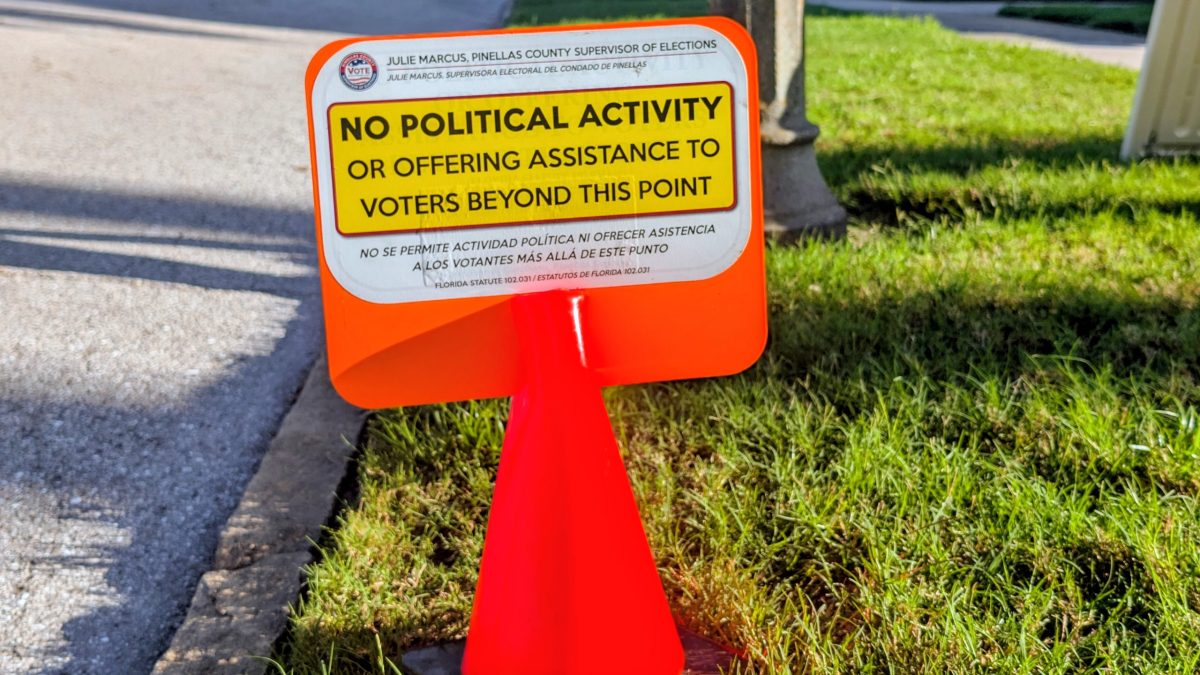
The county will operate seven early voting sites, 24 mail ballot drop locations and 157 community polling places for the upcoming election, Chase said. Every registered voter is within five miles of an early voting site and three miles of a drop box.
“When we plan an election, we look at voter access as a whole, rather than viewing each voting method in isolation,” Chase told the Tampa Bay Reporter. “We believe that provides equal access.”
Early voting site designations are due at least 30 days before Election Day. The issue was not resolved by the Oct. 4 deadline.
Bennette expressed “serious legal concerns under three distinct protections”: Section 2 of the Voting Rights Act, the 14th and 15th Amendments and state election laws.
The election’s office, however, believes adding an early voting site would also violate Florida Statute 101.657, which mandates equal geographic access. Chase said officials cannot establish a new South St. Pete location without adding others to balance the county map.
“You would have to add at least two more early voting sites, and likely three,” he added. “And we would say that there are eligible early voting locations. One is in Gulfport.”
Chase noted that the Gulfport location is less than a mile from a proposed site in the Child’s Park neighborhood. St. Petersburg residents can cast early ballots in the neighboring city.
Bennette addressed that suggestion in her letter. “Community members have explained that Gulfport’s racial history, including its history as a ‘sundown town,’ results in some … reluctance to use that location,” she wrote.
Esther Sanni, president of the NAACP St. Petersburg chapter, agreed. “History matters, particularly when we’re discussing voting access for Black communities,” she said.
“Whether every voter today personally views Gulfport through that historical lens is a different question, but when members of the community tell us that history affects their comfort with accessing a voting location, I believe that deserves to be heard rather than rebutted away.”
Sanni also questioned the elections office’s strict geographic interpretation of equal opportunity. She said true equity must account for population density, transit availability and community-specific needs.
Bennette wrote that over 73% of occupied households in a South St. Pete census block group that is 68% Black lack vehicles. That is 10 times the countywide rate.
Nearly 50 community groups requested a site in March, which Sanni said distinguishes local efforts from the SPLC’s last-minute escalation. When asked if election officials responded to the organization’s letter, Chase said they have had “many dialogues” with city stakeholders over the past two years.
He believes the “overwhelmingly” high use of mail-in ballots in Pinellas and South St. Pete, which also surpasses the countywide rate, shows voters are successfully navigating the system.
Sanni pushed back against that premise. “People successfully overcoming a barrier doesn’t mean we shouldn’t examine whether the barrier exists,” she said.
“I also think we have to be intellectually honest about the issue,” Sanni concluded. “The existence of a disparity does not automatically establish intentional voter suppression. But neither should statistics showing that Black voters continue to vote be used to dismiss legitimate questions about access.”
A change could be on the horizon. Chase said his office may eventually add two or three early voting sites, including one on South St. Pete, which would align with their interpretation of state law.
For now, the Childs Park Neighborhood Association is hosting a Halloween-themed early voting event at 1526 49th St. S. on Oct. 31, from 4 p.m. to 7 p.m.
For general voting information, visit the website here.