Black per capita income in Tampa Bay now paces the state. But as shifting political climates and policy changes threaten regional gains, stakeholders hope to establish a self-sustaining blueprint for long-term momentum.
That duality took center stage on Oct. 7 during a regional virtual dialogue titled “Future-Focused Strategies for Inclusive Growth.” Power Broker Media Group convened dozens of business, civic and political leaders to assess the area’s economic trajectory and prepare for new headwinds.
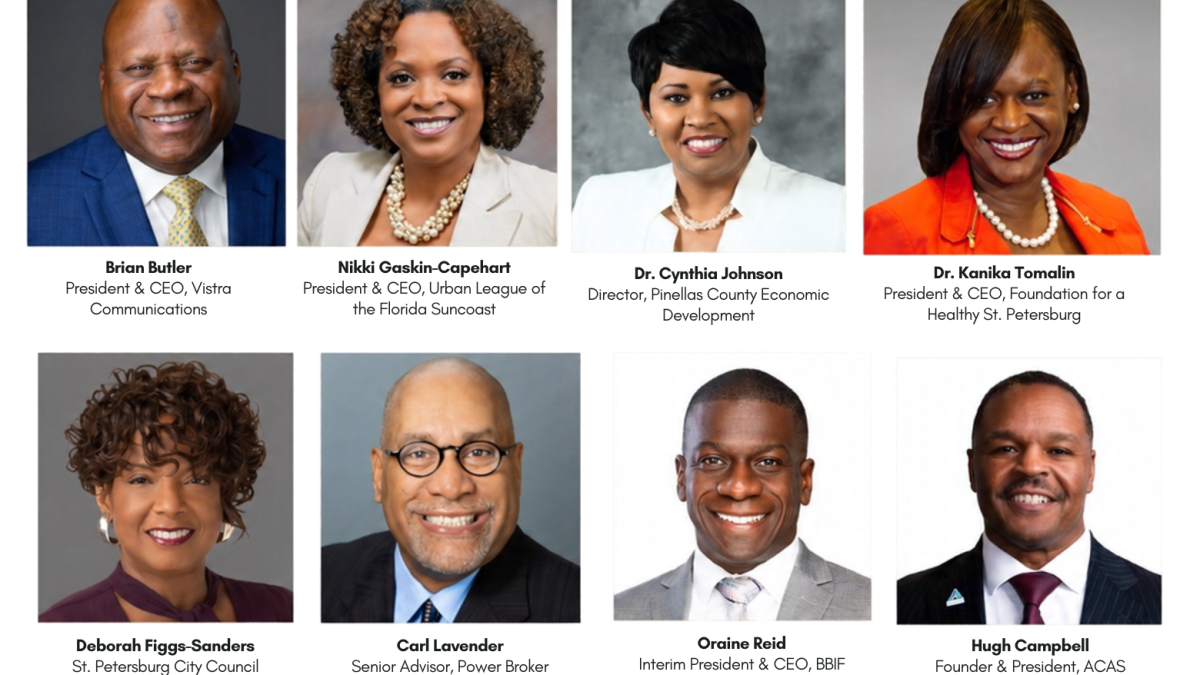
Participants frequently emphasized the importance of forging and sustaining relationships. Oraine Reid, interim CEO of the Black Business Investment Fund (BBIF), believes that “in times of uncertainty, our resilience comes from standing together.”
“The landscape may shift, policies may change and language may evolve, but our dedication must remain unwavering,” Reid told the Tampa Bay Reporter. “Change should not weaken our commitment. Instead, it should strengthen our resolve, deepen our partnerships and inspire us to find new ways forward.”
Power Broker’s recently released 20th-anniversary anthology, Tampa Bay Forward, spotlighted event speakers and data analysis that set a baseline for the subsequent discussion. Publisher Gypsy Gallardo began the meeting by noting that Black economic progress is “one of the least covered topics in the media,” and has “too little showing in our public discourse.”
A video highlighted some key regional metrics:
- Black per capita income increased by 28% between 2000 and 2024, surpassing the statewide average (22%), and now ranks first among Florida’s eight economic development regions.
- The aggregate, inflation-adjusted income of Black residents increased by 145%, from $9.2 billion to $22.5 billion, over the same period.
- The number of Black-owned firms with paid employees grew fivefold, to nearly 4,000.
“One of my biggest takeaways was the importance of stepping back and recognizing what’s going right,” said Duggan Cooley, CEO of Pinellas Community Foundation, after the event. “The data presented on economic growth in Tampa Bay’s Black community over the past two decades is encouraging, and we don’t always take enough time to recognize those gains. At the same time, significant challenges remain.”
Attendees also heard that historical wealth gaps have widened and homeownership rates have remained largely stagnant since 2000. African American-led firms in Pinellas and Hillsborough Counties still generate less than half the revenue of their Caucasian counterparts.
Participants traced foundational wins to intentional public-private partnerships, grassroots initiatives and robust mentorship networks. Dr. Kanika Tomalin, CEO of the Foundation for a Healthy St. Petersburg and former deputy mayor of St. Petersburg, pointed to citywide milestones, such as the 2020 plan to reduce poverty and the creation of local community benefits agreements, as catalysts for equitable growth.
“The most significant thing that we did was make inclusive prosperity and an inclusive, thriving economy everyone’s business,” Tomalin said.
Dr. Cynthia Johnson, director of Pinellas County Economic Development, emphasized the importance of a regional approach and a “collective willingness to do the work.” The conversation then pivoted to navigating political shifts.
“There was great hope after the so-called racial reckoning of 2020 that we had finally arrived at a shared understanding of why – quote, unquote – inclusive growth is vital to the health and sustainability of the economy,” said Moderator Carl Lavender. “Yet today, we see a full swing of the pendulum in the opposite direction.”
Tomalin explained that policy changes, while “very important,” will always vacillate depending on who holds office unless communities transform root conditions that determine social outcomes. Those include resource flows, power dynamics, relationships and connections and mental models, she said.
Johnson noted the importance of preparing for economic downturns during periods of prosperity. “When we’re in those valleys, we can’t just roll over and play dead,” said Brian Butler, CEO of Vistra Communications.
“We have to position ourselves to climb back to the peaks,” Butler continued. “Shore up those relationships. Get involved in those valleys. Because those valleys are coming.”
Nikki Gaskin Capehart, CEO of the Urban League of Florida Suncoast, said the nonprofit is working to reduce its reliance on government funding through real estate development and other revenue-generating opportunities. She also reiterated the benefits of a regional “collective community commitment” when navigating “hot and cold moments.”
Her fellow panelists agreed that interpersonal capital remains the region’s most reliable anchor against external turbulence. “What will sustain us through the ‘hot and cold’ moments is the strength of our relationships,” Cooley said.
“It comes back to neighbors seeing one another, believing in one another, and helping each other succeed.”
Hugh Campbell, founder of AC4S Technologies, also noted that enduring commercial success requires consistent execution and genuine connection. “The impacts are real,” he said.
“But to overcome those impacts, you have to do what your customers need and want,” Campbell added. “This is a very, very difficult season … but I cannot emphasize enough that this is all based on relationships.”
For more information on Tampa Bay Forward, visit the website here.