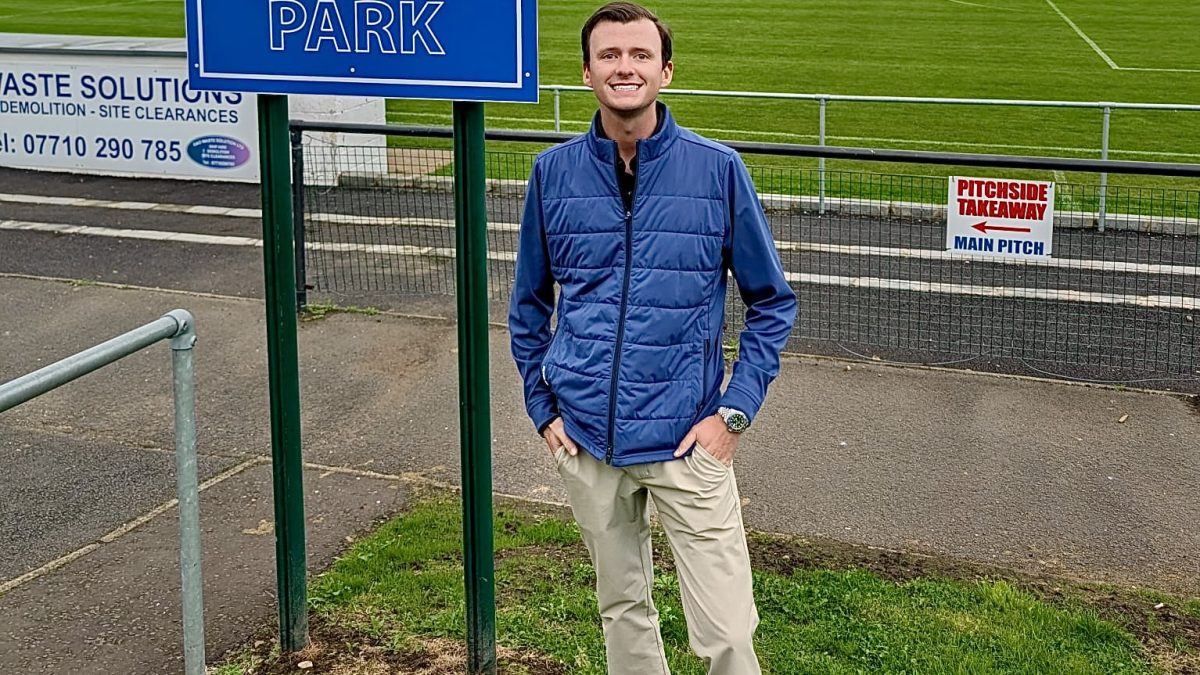
Pro sports ownership has long been a billionaire’s game, but Tampa tech entrepreneur Will Freeman is increasing access for everyday investors.
Freeman began his career with LinkedIn and Oracle before bootstrapping a technology consulting company that he exited last year. He then launched Catalyst Sports Ventures (CSV), became the minority owner of a Scottish and Welsh football club and is now having “advanced conversations about a majority stake and board chair position” with an independent English women’s team.
He is also a philanthropist who established the Freeman Global Football Award Fund at the University of South Florida in August, despite no previous athletic experience.
“I have no background in sports,” Freeman said. “I was not an athlete; I had no real meaningful ties to the space.”
His path into European football started by chance at a chief information officer conference, where he met a former tech executive who bought a team in Northern Ireland. The conversation convinced Freeman that ownership did not require Premier League money and carried less financial risk at smaller scales.
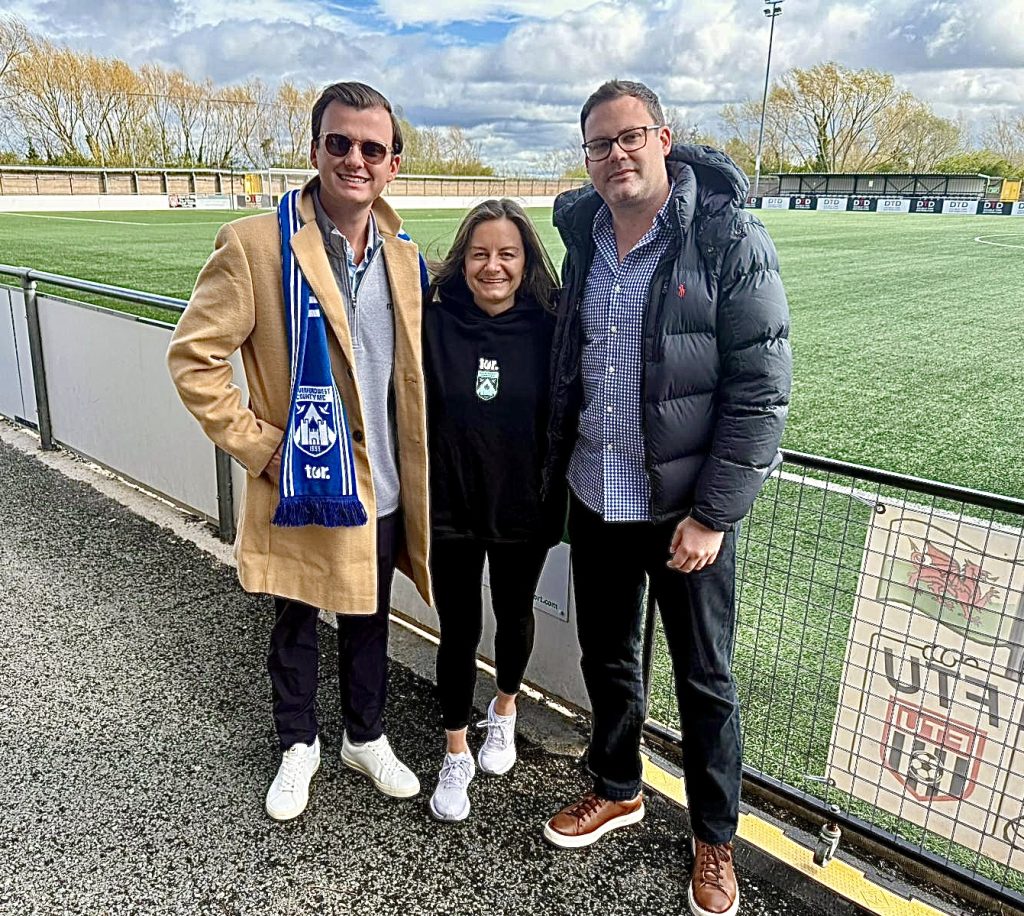
In late October 2025, he bought a stake in Haverfordwest County AFC, a Welsh club in the top-tier Cymru Premier League, and became a board advisor. “I put my own capital in,” Freeman said.
“It started as a way to diversify investments, and it seemed like something cool where I could bring capital and expertise.”
In September, Freeman became a minority owner and board member of the Kilwinning Rangers F.C., a Scottish club competing in the lower-level Lowland League. “That was a big catalyst for saying, ‘All right, this is something more than a single investment,’” he said.
Rather than raising money for a single team or a closed-end fund, CSV acts as a holding company. Stakeholders gain exposure to existing and future investments, a model Freeman compared to “a sports index fund versus a sports common stock.”
“You’re not just investing in the Welsh club or the Scottish club,” he said. “You have exposure to them all, which is good from a risk perspective, but also just from a pure enjoyment perspective.”
The firm has raised about $300,000 toward a $500,000 pre-seed round using a simple agreement for future equity. All five investors contacted Freeman after seeing news articles or his LinkedIn posts, he said.
Freeman said he prefers to “start lean.” He also believes that the “business model is simple because it’s something that I was funding myself.”
He capped the raise at $500,000 to maintain a sensible valuation. Freeman noted that clubs often say “not all money is good money,” and he wants active partners who bring business expertise.
CSV targets lower-to-middle-market teams that Freeman said trade at two or three times the revenue of higher-priced tech startups. European deals typically happen off-market, he added, which limits competition from rival buyers.
Freeman said CSV was the Welsh club’s only outside investor alongside the majority owner. Smaller teams also offer media and real estate upside backed by generational fan loyalty, he added.
“There’s just a strong sense of community, and there’s always going to be that demand to go support a team that, frankly, in the states, if there were a club of that size, probably not many people would go watch the match,” Freeman said.
He has no immediate plans to buy into U.S. soccer teams or local professional sports franchises. Institutional capital, fewer available teams and conglomerate ownership make domestic deals less attractive than European clubs, Freeman said.
However, he remains attracted to other alternative investments. Freeman has partnered with a distillery in the Panhandle to produce Rising Tide Gin, recently purchased a barrel of 7-year-old Scotch whiskey stored in Glasgow and is now considering buying a small vineyard to create a “private label wine company.”
“You can taste scotch, watch a football match, drink some gin and say it’s part of your work,” he added. “Not many people can do that.”
Freeman is also a philanthropist. The advisory board member for USF’s Nault Center for Entrepreneurship and fractional chief information officer for Community Foundation Tampa Bay established the Freeman Global Football Award Fund to support the university’s men’s soccer program.
Players can apply for funding to pursue a post-graduation athletic career or enter the business side of soccer. “I do believe there’s a lot of value in the U.S. sports ecosystem,” Freeman said.
He founded the Global Sports Access Foundation, a nonprofit that helps young adults pursue careers in sports business. Freeman, inspired by his rescue pit bull, also established a fund at the Humane Society of Tampa Bay that provides free training, crates and supplies.
Success often requires luck and insider access, and “not everyone has that opportunity,” Freeman said. “I’m just trying to remove barriers – both cost-wise and connection-wise – to allow people to have more opportunities. And pets, as well.”