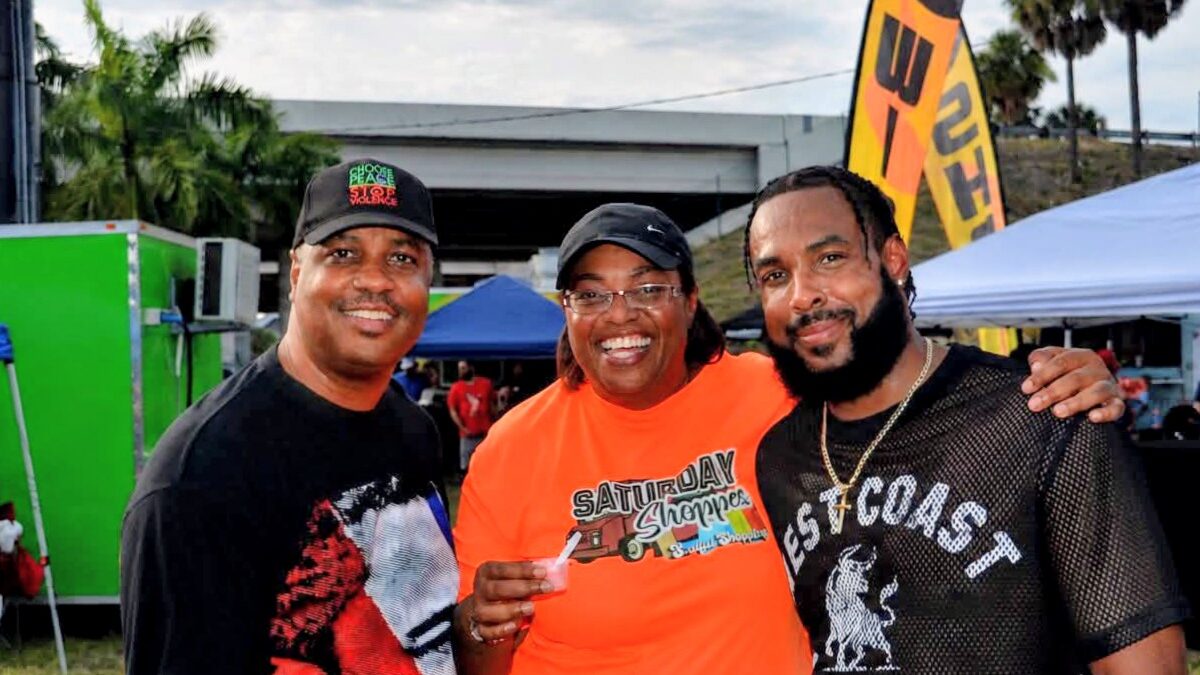
Renee Edwards has spent the last five years proving that marginalized entrepreneurs can thrive with the right infrastructure. She is now scaling that thesis through a groundbreaking food truck academy, a retail and content-creation hub and a new role as a television host.
Edwards founded Saturday Shoppes in 2021 as an accessible alternative to St. Petersburg’s oft-exclusive markets. Her events, initiatives and the resulting number of small business success stories have since grown exponentially.
The centerpiece of her latest expansion is a culinary academy launching Oct. 1. Backed by the City of St. Petersburg, the program will help mitigate two of the mobile food industry’s steepest hurdles: Working capital and operational experience.
“You can do a six-month class, learn everything about your business for free – learn how to price for profit, learn what people like and don’t like – and then graduate with money,” Edwards said. “You can’t beat that.”
Proposals to develop and operate the city’s nascent Food Truck Academy were due by July 14. Edwards, who previously spearheaded vending, retail and e-commerce academies, secured a one-year, $65,000 municipal contract over 11 other applicants.
Her pitch uniquely included a fully functioning food trailer, dubbed “The Blueprint,” rather than relying on virtual classes or a static kitchen. Edwards will select 10 participants, with each operating the business for 10 to 12 days at St. Petersburg College campuses, local festivals and various high-traffic locations.
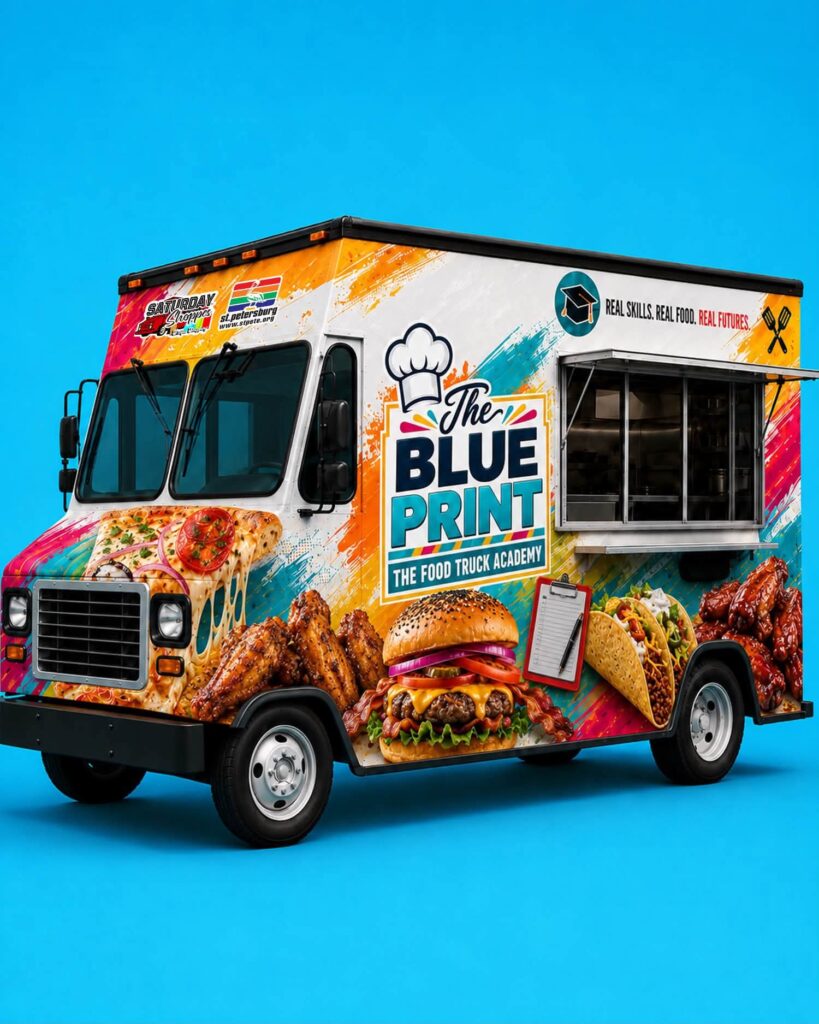
She expects each student to earn at least $10,000 – enough to cover startup costs for a mobile food business – by the time they graduate in March 2027. Perhaps most importantly, students will learn whether they are suited for the industry before incurring debt.
“I don’t believe in just seeing something and thinking you can do it,” Edwards said. “By the time you drain grease 10 times, by the time you clean a hood 10 times, you got it.”
Edwards is also restructuring her brick-and-mortar footprint. The success of Saturday Shoppes, which began in a small church parking lot before quickly moving to Tropicana Field, led to a store for up-and-coming vendors.
Everyday Shoppes opened at the Brandon Exchange shopping mall in 2024. Edwards, citing restrictive operational hours and impending rent hikes, recently shuttered the store in favor of a strategic partnership with the Tampa Housing Authority.
The organization acts as a master developer by integrating subsidized commercial retail spaces into its mixed-income residential developments. Edwards said the housing authority is covering 80% of the build-out costs for a new West Tampa facility that will offer far more than a traditional storefront.
A new-and-improved Everyday Shoppes will feature flexible retail space, a content-creation studio, pack-and-ship logistics and fingerprinting services, providing a versatile headquarters for growing micro-enterprises, Edwards said.
She compares her endeavors to business incubators for oft-marginalized entrepreneurs rather than a “place for you to stay.”
“Saturday Shoppes is for you to come get the tools and go fly,” she added. “The only thing I was missing was the food component.”
Her local impact has caught the eye of television producers, who recently selected Edwards to host Food Truck Empire. She said the new show will pit local mobile kitchens against one another in weekly, genre-specific culinary battles, while offering unprecedented visibility for regional vendors.
Food Truck Empire will air on one of Tampa Bay’s primary broadcast networks, Edwards said. She called the reality series “the real deal.”
“It’s going to be awesome because it’s not just Saturday Shoppes vendors,” Edwards said. “It should start within the next two months.”
She credits her success to “strong guidance” and “great partners.” Specifically, St. Petersburg Mayor Ken Welch, City Councilmember Deborah Figgs-Sanders, former Tampa Bay Rays president Brian Auld and Nikki Gaskin-Capehart, CEO of the Pinellas County Urban League.
Their support has yielded tangible results. Edwards noted that 38% of her vendors have been accepted into historically exclusive markets thanks to her rigorous, hands-on and incubator-style approach.
Yet, even with a new city contract, brick-and-mortar store and television platform, Edwards is already plotting her next entrepreneurial impact-increasing play. She hopes to secure a dedicated pool of investment capital that protects vulnerable business owners from predatory loans.
“How do we help them build if their plan works?” Edwards rhetorically asked. “And how do we ensure they’re not always one bad day away from total financial ruin?”