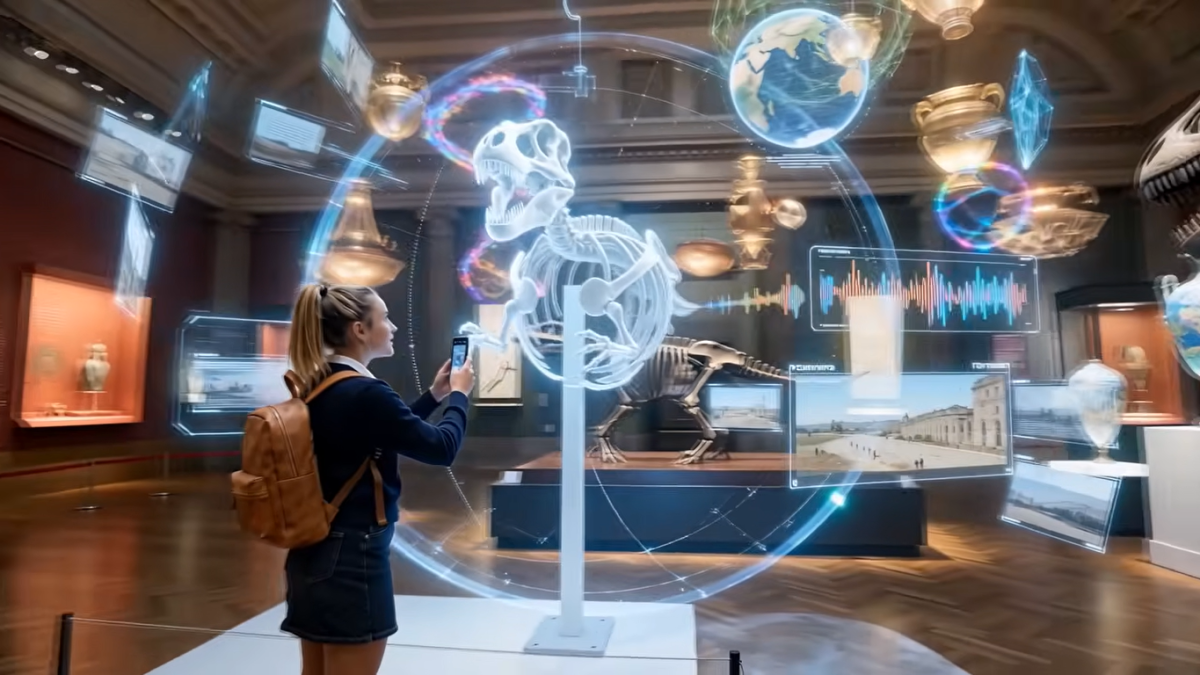
St. Petersburg-based AR Machine is leveraging artificial intelligence and web-based augmented reality to modernize museum exhibits, letting visitors step inside history without downloading an app.
Co-founder Kevin Hohl has explored how interactive media and technology can create new ways for people to connect with art, history and community stories for more than 25 years. His dreams have since become a reality thanks to the rapid rise of artificial intelligence.
“AI has made our company so incredibly powerful – we’re just able to do so much more,” Hohl said. “And we’re using it in these immersive ways to basically make the museum experience a little more fun, a little more entertaining.”
Hohl launched AR Machine in January 2023 after feeling undervalued and frustrated by a lack of vision in his previous roles. “I knew I could do this on my own, and there was work out there,” he said.
Hohl partnered with co-founder and lead developer Brandon Cote, a “genius.” The duo then began building interactive touchscreen displays, custom software and augmented reality experiences for museums, universities and forward-thinking organizations.
The overarching goal is to transform exhibitions into engaging, accessible and unforgettable experiences. Their efforts have not gone unnoticed.
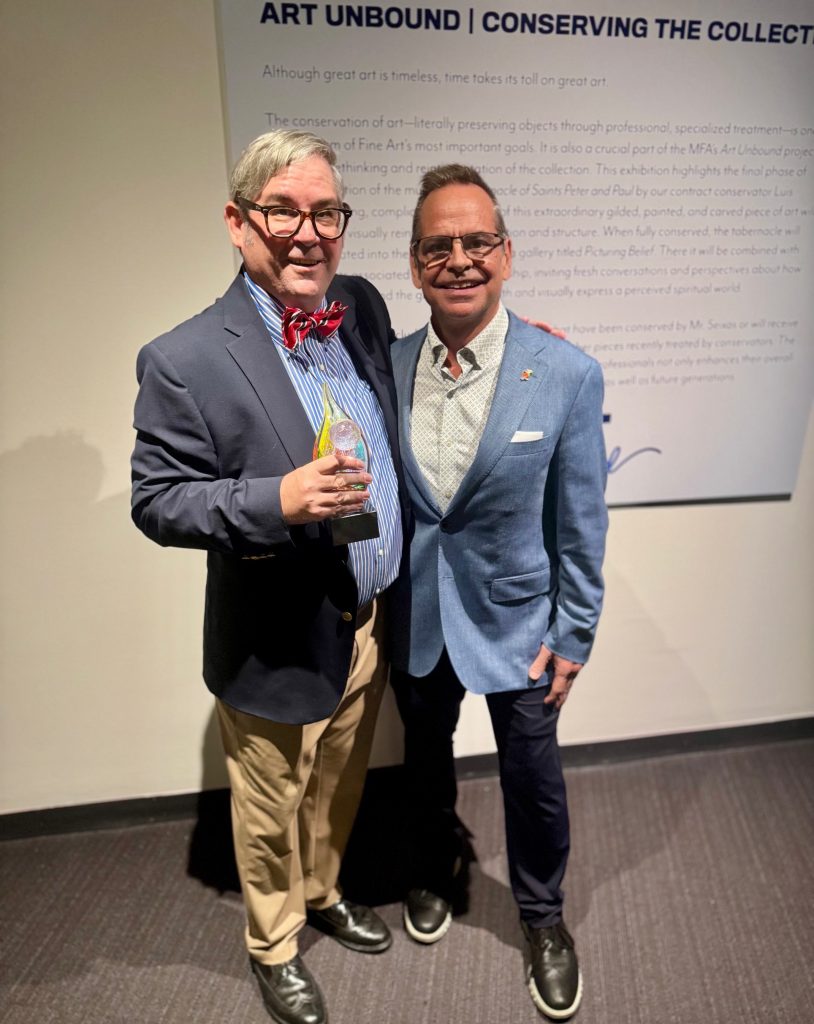
Hohl recently received a 2026 MUSE Award from the St. Petersburg Arts Alliance for his contributions to the intersection of art and technology. The recognition stems from his decades-long dedication to the local arts community and willingness to prioritize impact over profit.
“I never let money trump want,” Hohl said. “If somebody needs something or wants something … and I can do it, then let’s do it and figure the money out later. It’s a horrible idea for business, but I think it’s part of why I’m here.”
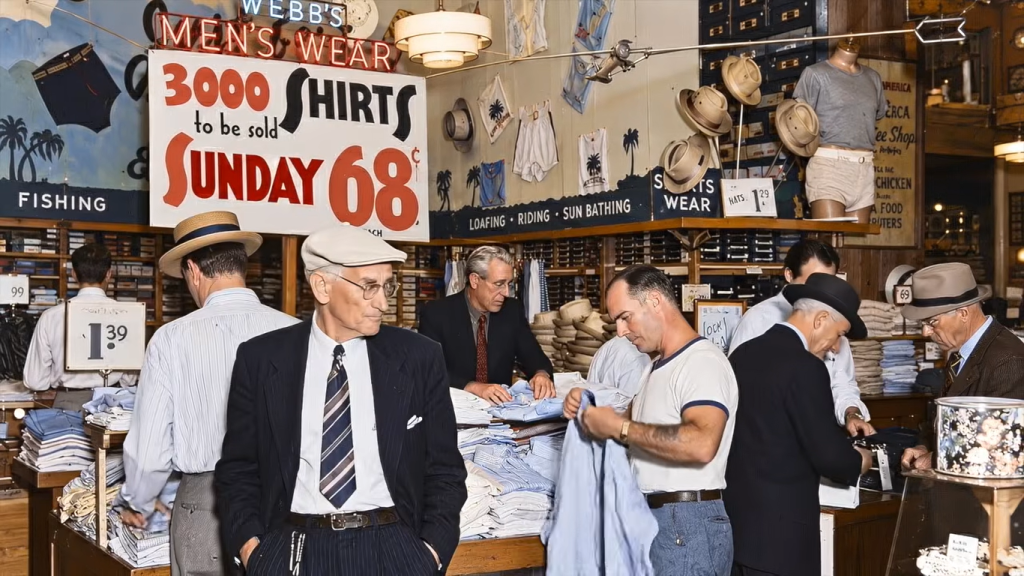
When the St. Petersburg Museum of History needed a digital video exhibit detailing the history of Doc Webb, who famously created the retail empire Webb’s City, Hohl delivered a high-quality, cinematic short despite a shoestring budget.
AR Machine uses historical photographs and AI to animate the still images into a cohesive, accurate historical narrative. The company is now scaling its technology for larger national clients.
AR Machine recently secured a lucrative contract to digitally resurrect Fort Nelson, a Revolutionary War-era settlement in Louisville, Kentucky, with virtually no surviving physical documentation.
Using artificial intelligence, limited historical descriptions and “all the tools at our disposal,” Cote generated a complete 3D model of the fort in just four days for the Sons of the American Revolution (SAR) Education Center and Museum.
Hohl explained that attendees can view the immersive model through a web-based “AR portal” rather than downloading an app. Instead, they scan a QR code or tap a near-field communication (NFC) tag to launch a 360-degree environment in their smartphone’s browser using built-in lidar technology.
“We can let someone step inside the entire Fort Nelson,” Hohl said. “The only place that you can get it is to go, but now it’s in your pocket for the rest of your life.”
AR Machine rigorously vets its digitally created content to ensure historical accuracy. To ensure historical accuracy for a SAR Education Center and Museum prototype, the startup consulted three subject matter experts to verify musket lengths, sword styles and uniforms for colonial Loyalists and Continental Army soldiers fighting in North Carolina.
Hohl noted that the technology to create elaborate 3D models in a web-based AR portal was not available six months ago.
“I am so overjoyed that the technology has caught up to our ideas,” Hohl said. “They’re all doable, and they’re cost-effective.”
The startup is now expanding its national footprint. Hohl, however, has set his sights on a coveted local project: an immersive exhibition on the late Elie Wiesel at the Florida Holocaust Museum in St. Petersburg.
Wiesel was a Nobel Laureate, advocate and Holocaust survivor whom President Barack Obama called the “moral conscience of our world.” The museum was entrusted with the part-time St. Petersburg resident’s prized collection in 2024.
Hohl has already dedicated dozens of pro bono hours to developing a framework and design concept for the interactive exhibit. While the project is now open to bids, he believes outside companies cannot match AR Machine’s technological capabilities, cost-effectiveness or local commitment.
“I would be heartbroken – I just don’t think anybody else should do it,” Hohl said of the Wiesel exhibit. “No one’s going to care as much as we can.”