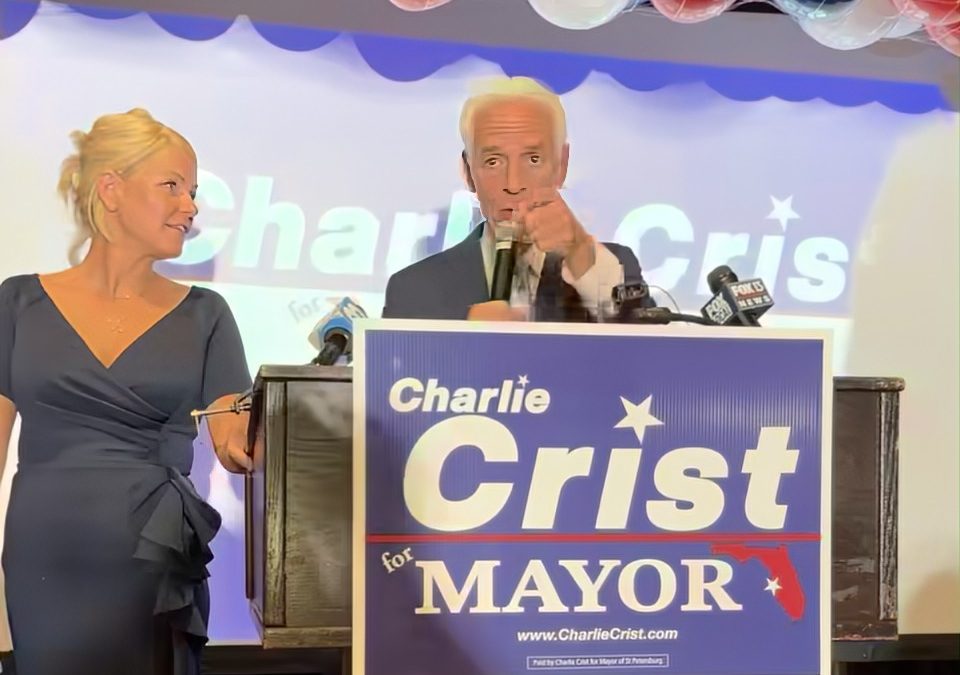
Charlie Crist, a former state senator, education commissioner, attorney general, governor and congressman, can add a new title to his resume: Mayor of St. Petersburg.
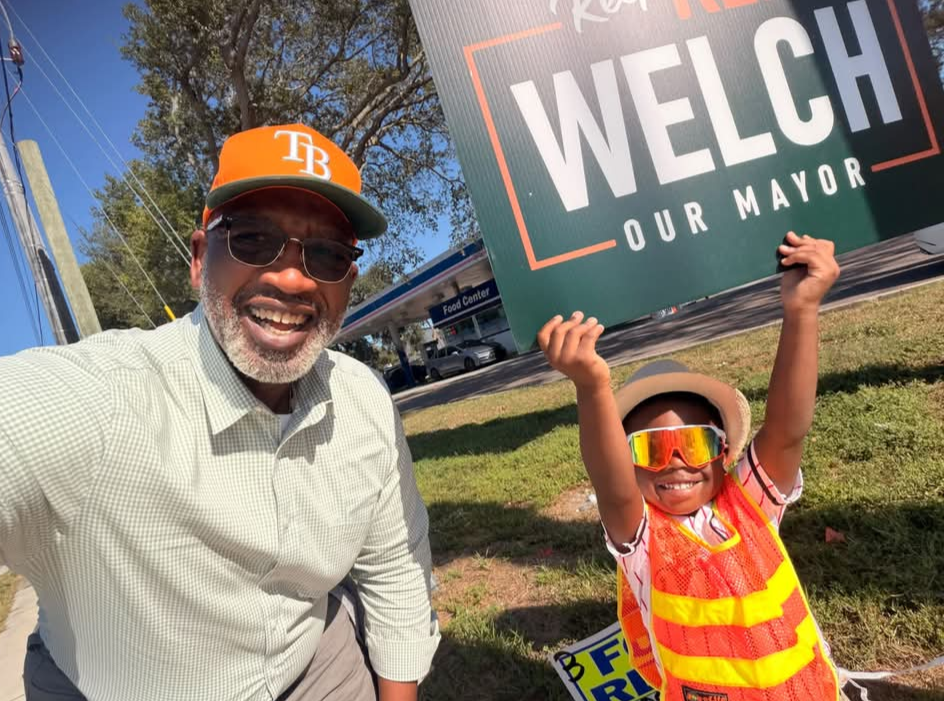
Crist won a dominant 62% to 38% over Mayor Ken Welch on Tuesday night after a heated election season. The challenger, 70, frequently criticized the incumbent’s handling of hurricane recovery, a new stadium deal with the Tampa Bay Rays and a redevelopment proposal that would have brought a Moffitt Cancer Center facility to downtown St. Petersburg.
Both candidates, however, were conciliatory when addressing supporters. “I want to thank the mayor; I want to thank him for serving and offering himself up to serve,” said Crist, who supported Welch’s inaugural campaign.
“I want to thank him for running a decent race.”
Welch, 62, became St. Petersburg’s first Black mayor in 2021 with 61% of the vote. He conceded his reelection bid about 30 minutes after polls closed.
“It was a blessing for me to serve as mayor of my hometown for a season, for an extended season of five years, and we hoped for an extension of that service for one more term,” Welch said. “But the voters have made a clear choice, and they selected a different mayor to move us forward.
“I wish Charlie Crist the best in his next administration, and I just left [him] a voicemail a few minutes ago.”
St. Petersburg voters also elected two new council members and approved all five ballot referendums. Public health practitioner Linsey Grove secured 55% of the vote to replace term-limited Councilmember Gina Driscoll in District 6.
The district encompasses downtown St. Petersburg and southeast neighborhoods. Trevor Mallory, president of a housing nonprofit, also emerged from a five-way primary in August and finished with 45% of the vote in the citywide race.
Hillsborough County Assistant Public Defender Gabriel Hament will represent District 2 after gaining 53% of the vote. He bested property manager Courtney Bermudez (47%) to succeed term-limited Councilmember Brandi Gabbard.
St. Petersburg can now levy an additional property tax to support a $600 million bond issuance that will accelerate overdue water, sewer and stormwater projects. Welch championed the initiative, Crist opposed it and about 74% of voters said “yes” to the ballot question.
“The plan was approved but not the architect,” Welch said. “Ya’ll think about that.”
Voters also approved selling vacant, city-owned lots for affordable housing, extending the Harborage Marina’s lease on Bayboro Harbor, allowing longer leases at Port of St. Petersburg and clarifying administrative changes to continue holding municipal elections in even-numbered years.
The 66% of registered voters (406,622) who cast ballots in Pinellas County helped decide several other notable regional and statewide races. Those include:
Governor
U.S. Rep. Byron Donalds (47% in Pinellas) became Florida’s first Black governor after securing support from President Donald Trump and Gov. Ron DeSantis. He defeated former U.S. Rep. David Jolly (D), who secured 51.5% of the vote in his native county.
Donalds told supporters his mission as governor is to ensure people who struggle financially can “build a great life here in the great state of Florida.”
U.S. Senate
U.S. Sen. Ashley Moody (R), a Tampa Bay native, defended her seat (50.8%) despite losing Pinellas (48.9%). State Rep. Angie Nixon finished with 48.1% of the overall vote.
U.S. House
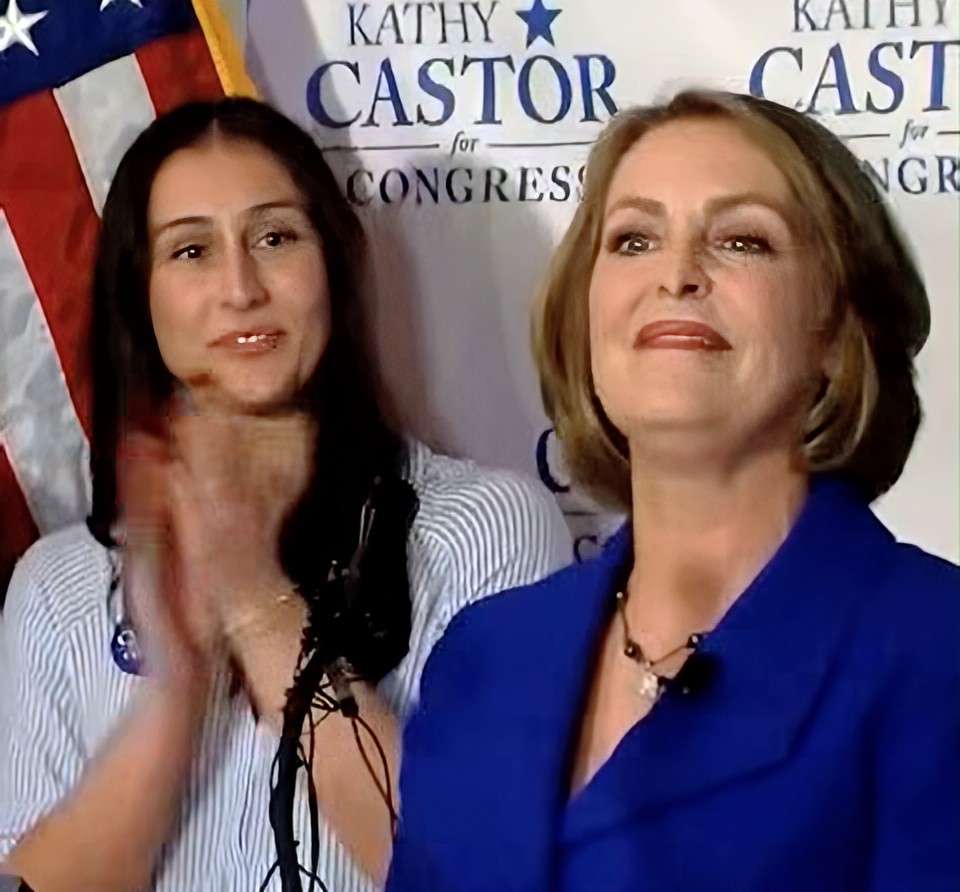
Florida Democrats gained 16 House seats and lost one to create the chamber’s smallest GOP majority since 1996. While all of Tampa Bay’s congressional districts leaned red after mid-decade redistricting, Democratic Rep. Kathy Castor won reelection in a redrawn District 14.
She overcame a roughly 11-point Republican advantage to defeat former state Rep. Mike Beltran for the Hillsborough County seat. “This victory is proof that no amount of money, politics or extreme agenda can replace the trust earned by showing up, listening and delivering for the people we serve,” Castor said.
In District 13, which covers parts of Pinellas and Pasco Counties, Rep. Anna Paulina Luna (49.48%) narrowly leads her Democratic challenger, Retired U.S. Army Brig. Gen. Leela Gray (48.68%). Some outlets project an incumbent victory; however, as of 8:30 a.m., the Associated Press has yet to declare a winner.
To the south, Sydney Gruters (51%), former executive director of the New College Foundation, defeated former Sarasota Mayor Kelly Kirschner (47%) in a redrawn District 16. Democrats had hoped to secure the open seat.
The district includes parts of St. Petersburg – Kirschner won 61% of the vote in Pinellas – and now spans six counties.
State Legislature
State Sen. Brian Nathan (D) won re-election in Florida’s District 14 with 52% of the vote. He will retain the Hillsborough County seat he flipped in March. The race was a special election rematch with former Rep. Josie Tomkow (R).
Attorney Lindsay Poleaga-Quigley (D) gained 58.4% of the vote to easily defeat commercial real estate developer Melissa Rutland (R) in House District 60. Rep. Lindsay Cross (D) announced in March that she would not seek reelection, and many expected Rutland to provide a formidable Republican candidate.
Rep. Nick DiCeglie (R) survived a scare against challenger Karla Kemp (D), a former paramedic and firefighter, in District 18. The incumbent gained 50.8% of the vote and will continue representing central Pinellas.
County Commission
Tim Hughes (D), conservation chairman for the Suncoast Sierra Club, pulled off the region’s most unexpected upset. He defeated Pinellas Commissioner Brian Scott (R) by just over a point (50.5%).
Urologist Neil Manimala (D) bested educator Stacy Hahn (R) to win the District 5 seat in Hillsborough County. Challenger Aileen Rodriguez (D), previously a regional Director for former U.S. Sen. Mel Martinez, unseated incumbent Josh Wostal (R) to flip the commission blue.