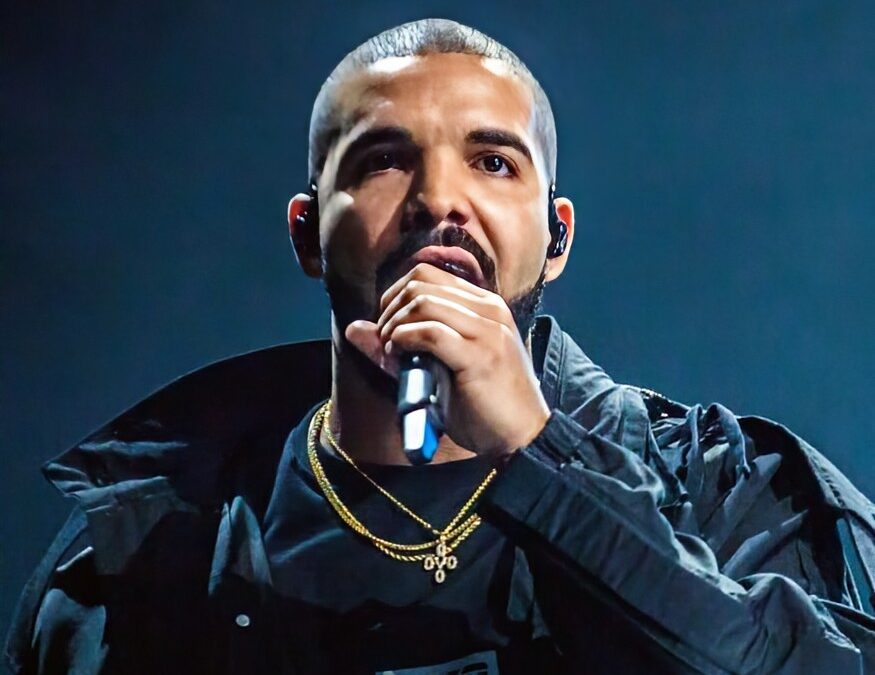
A simmering legal battle between superstar rapper Aubrey “Drake” Graham’s lifestyle brand, October’s Very Own (OVO), and a St. Petersburg lender recently reached a new flashpoint.
Applied Real Intelligence (A.R.I.) touted its investment in OVO earlier this year. The firm announced on Sept. 10 that it was kept entirely in the dark about the brand’s recent sale despite holding strict contractual information rights.
OVO owes A.R.I. over $5.04 million for failing to repay a $4.6 million loan, according to a 391-page motion filed in the Ontario Superior Court of Justice on August 13. Two weeks later, Drake sold a 51% stake in his Toronto-based company’s intellectual property to Authentic Brands Group for $117.6 million.
Led by Dr. Zack Ellison, managing general partner, A.R.I. now alleges it received no proceeds from the transaction, was issued no payoff letter and did not authorize a release of its claims – as required by law. The investment management firm asserts it only learned of OVO’s finalized sale through a post-closing press release.
“Important information concerning the transaction and the treatment of our rights has still not been provided, and we will seek to obtain that information through the court process since OVO has not provided it despite multiple requests,” A.R.I. said in a statement.
Drake founded OVO in 2008 as a music collective. The company has evolved into a globally recognized consumer and lifestyle brand known for its distinctive owl logo and high-profile collaborations.
A.R.I. previously provided a senior secured term loan facility to OVO and subsequently served as the lead investor in its convertible note financing. The firm wrote in March that the financings reflect its “strategy of pairing flexible growth capital for borrowers with structured protections and equity-linked upside for investors.”
Drake had just released a triple album at the time of that announcement, which highlighted “renewed attention” on OVO following his widely panned feud with fellow rapper Kendrick Lamar. “We seek to create investments where legal architecture, economic terms, collateral and negotiated rights matter as much as the growth story itself,” Ellison said.
“Cultural influence can create extraordinary investment opportunities when paired with disciplined structure, enforceable rights, and rigorous risk management.”
Ellison sued OVO three months later.
A.R.I. initiated litigation in the Supreme Court of British Columbia on June 11 over OVO’s alleged refusal to pay $4.6 million in default interest, legal fees and other expenses accrued under the terms of the loan. Authentic’s acquisition contract stated that Drake’s team must submit “duly executed payoff letters and…releases with respect to all OVO Debt.”
Authentic is a privately held company backed by prominent institutional investors, including BlackRock. General Atlantic has poured nearly $2 billion into the firm, which is now the nation’s second-largest licensor, behind The Walt Disney Co.
Digital Music News called the sale to Authentic “good news” for both A.R.I. and OVO. “We’re just a couple kids from Toronto who started something we believed in,” Drake said at the time. “Here we are 20 years later, same kids with bigger dreams.”
A.R.I., however, subsequently stated that it holds “strict information rights requiring OVO to disclose details regarding its financial condition, business, prospects and corporate affairs,” under the terms of its financing agreements.
The financing terms also outlined “specific protections in the event that OVO was acquired before the notes were converted or repaid.” A.R.I. alleges that Drake’s company has ignored those requirements.
In addition, the firm highlights how public acquisition filings notably omit the identity of a confidentially identified “Specified Person” excluded from noteholder payouts, leaving it unclear if A.R.I. ‘s litigated claims were intentionally sidestepped.
“We were not informed of the transaction negotiations, asked to provide a payoff amount or payoff letter or asked to authorize the release of our claims,” A.R.I. wrote. “We received no portion of the transaction proceeds.”
A.R.I. now plans to force transparency through the courts. The firm stated that it will pursue contractual claims until the matter is resolved through full payment, including continuously accruing interest, or a negotiated settlement.