St. Petersburg approved a five-year, $730,000 contract with Flock Safety in January 2024. City Council members held their first discussion on the matter Thursday.
The agreement, which included up to 50 automated license plate reader (ALPR) cameras, passed on the consent agenda without public discourse or a direct vote – as is customary. Multiple city officials noted that the technology caused little controversy at the time.
Privacy and misuse concerns, however, have recently hit a fever pitch. Public scrutiny prompted Thursday’s thorough discussion on the intersection of public safety and mass surveillance.
“This is about where we draw a line for allowing our movements to be surveilled and making sure the police have the tools that they need,” said Councilmember Richie Floyd. “I think that’s the big debate – have we crossed a line?”
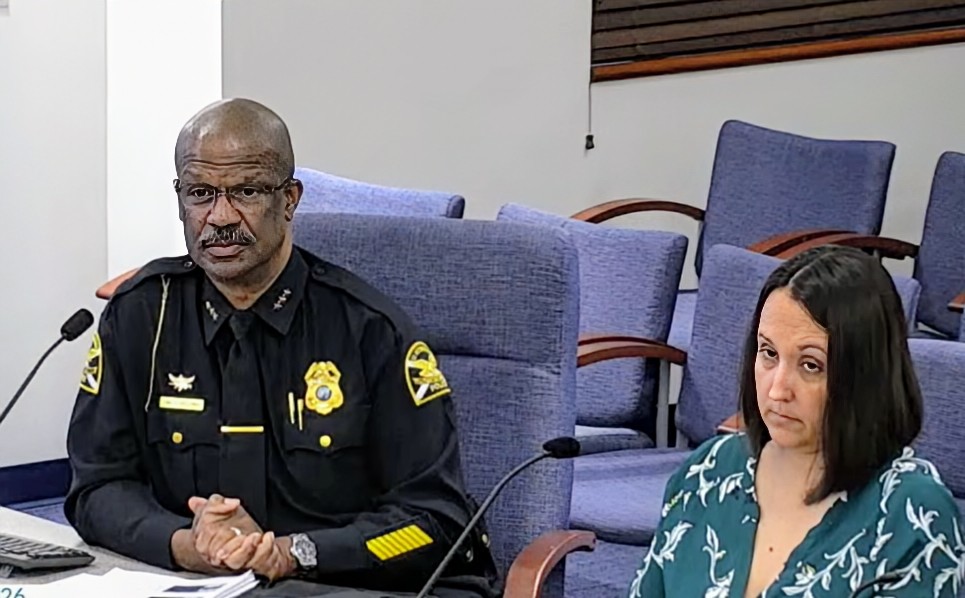
The city began using ALPRs in 2018 and now deploys 42 cameras. St. Petersburg Police Chief Anthony Holloway does not plan to expand the network.
He outlined strict internal parameters designed to prevent misuse. Holloway also emphasized that the cameras do not feature facial recognition software or monitor daily activities.
The cameras provide high-ranking officers with a starting point by capturing images of vehicles and license plates, he said. ALPRs assist with homicide, auto theft, burglary and serious traffic investigations, and help locate missing people.
SPPD deletes captured images not stored as evidence after 30 days, Holloway said. The month-long window accommodates residents whose homes were burglarized while they were on vacation.
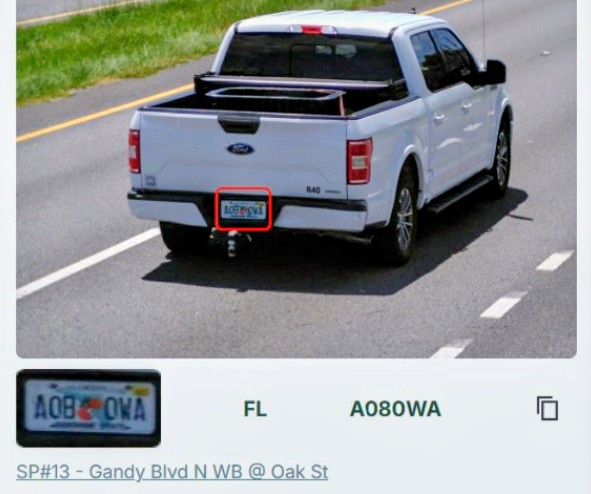
Access to ALPR databases is restricted to sergeants, detectives and traffic homicide investigators. Holloway said he and patrol officers cannot conduct searches.
Qualified personnel must input a specific offense type, a valid dispatch report number and a written justification, Holloway explained. Data belongs exclusively to St. Petersburg and is never sold.
Federal agencies lack network access, and out-of-state law enforcement cannot run independent queries.
Holloway said Florida agencies must sign an agreement with SPPD and follow the internal process. Leadership receives an alert when someone accesses their database.
“I’m aware that there are agencies in the State of Florida that are using the data for immigration enforcement,” Floyd said. “That goes back to the concerns I have about the broader political context.”
There are “authoritarian proclivities in our state and federal government,” Floyd said. “Tools that give a lot of power to people can be abused, and we’ve seen some abuse.”
SPPD conducts weekly audits, while Flock software flags users who repeatedly run the same license plate. Residents can also contact the department to verify if their license plate has been searched, a transparency measure implemented in collaboration with the mayor.
Holloway acknowledged that one out of 570 sworn officers is currently under criminal investigation for abusing the ALPR system. “If someone misuses this, they shouldn’t be wearing a badge. Period,” he said.
The cameras have helped the department maintain a 100% homicide clearance rate over the past 3.5 years, a metric Holloway challenged any other city to match. He also highlighted a jailhouse message from an inmate who was apprehended with the technology.
“He’s happy that we’re thinking about taking down Flock because he got caught twice on this,” Holloway said. “I think that’s the best testimonial we can give to you – the criminals are happy that we’re thinking about getting rid of Flock.”
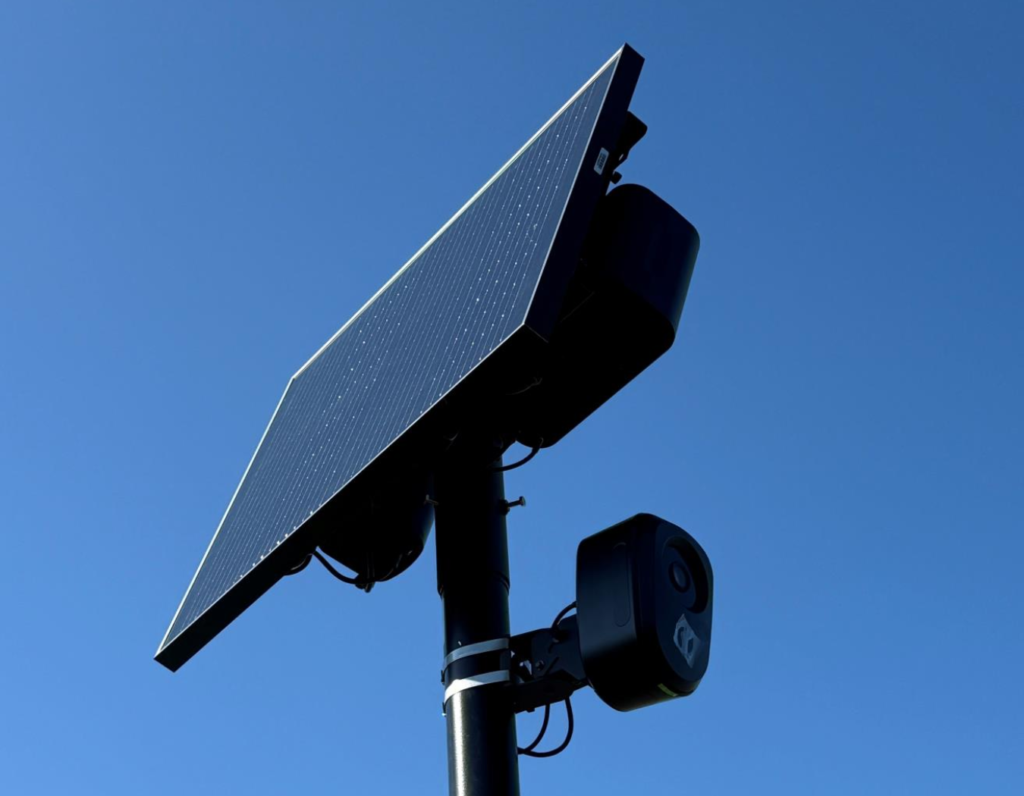
Civil rights advocates, however, argue that the technology’s capabilities far exceed traditional investigative tools and require external regulation.
Kirsten Anderson, deputy legal director for the Southern Poverty Law Center (SPLC), appeared at Floyd’s behest to outline looming Fourth Amendment challenges. She warned that ALPRs differ fundamentally from red-light or toll booth cameras, which only trigger during traffic violations.
Anderson said the cameras create “vehicle fingerprints” that catalog makes, models, colors, decals and roof racks. She pointed to a recent federal court ruling in Oklahoma that determined ALPR use requires a warrant, noting the unchecked technology has led to nationwide lawsuits and false arrests due to AI misinterpretation.
City Attorney Joe Kelly countered that the Oklahoma ruling holds no binding precedent in Florida. Kelly noted that 12 of 13 federal appeals courts haven’t determined whether bulk license plate data collection constitutes an illegal search, and one previously determined it does not.
Kelly expects courts to maintain a legal distinction between tracking cell phones, which follow people into private spaces, and tracking vehicles on public thoroughfares.
Council members, who approve hundreds of consent agenda items monthly, agreed they would have pulled the Flock contract for discussion had they foreseen the subsequent controversy. They also defended SPPD’s use of the technology and transparency.
Councilmember Copley Gerdes equated an ALPR hit to an officer pulling over a vehicle that matches a physical description. “I just find no reason to pause. It’s working,” he said.
“The guardrails that I see are necessary,” Gerdes added. “We continue to have guardrails that other municipalities and governmental entities don’t have.”
Council member Brandi Gabbard agreed. She does not want criminals to think St. Petersburg has fewer investigative resources than other cities.
Instead of removing the cameras, Gabbard advocated for strict, statewide legislative guidelines. “I want us to find a sensible balance,” she said.
The debate will continue. Floyd requested future discussions to explore implementing public surveillance audits and transparency reports.
Holloway said he is open to changes, including daily audits. “As time goes on, we’ll look at each and everything.”