
Elite biomechanics analysis once required a six-figure laboratory. Valor Vision is condensing that power into a smartphone, and Tampa Bay prep athletes are the latest beneficiaries.
Virginia-based Valor will soon formally announce a partnership with IMG Academy. The renowned boarding school and sports training institute in Bradenton is known for preeminent youth athletic development.
IMG will use the startup’s proprietary motion-tracking and computer vision technology to assess student-athletes’ movement health, reducing injury risks and boosting performance. Top collegiate programs are already clients, and Valor is now scaling internationally.
“Previously, this had to be done in a full motion-capture lab that only NFL teams or university kinesiology programs would spend hundreds of thousands of dollars on,” Co-founder Evan Magnusson told the Tampa Bay Reporter.
“AI and our innovation have made it so that IMG Academy can assess all 1,500 of their athletes. The athletes and their parents can even do it from home.”
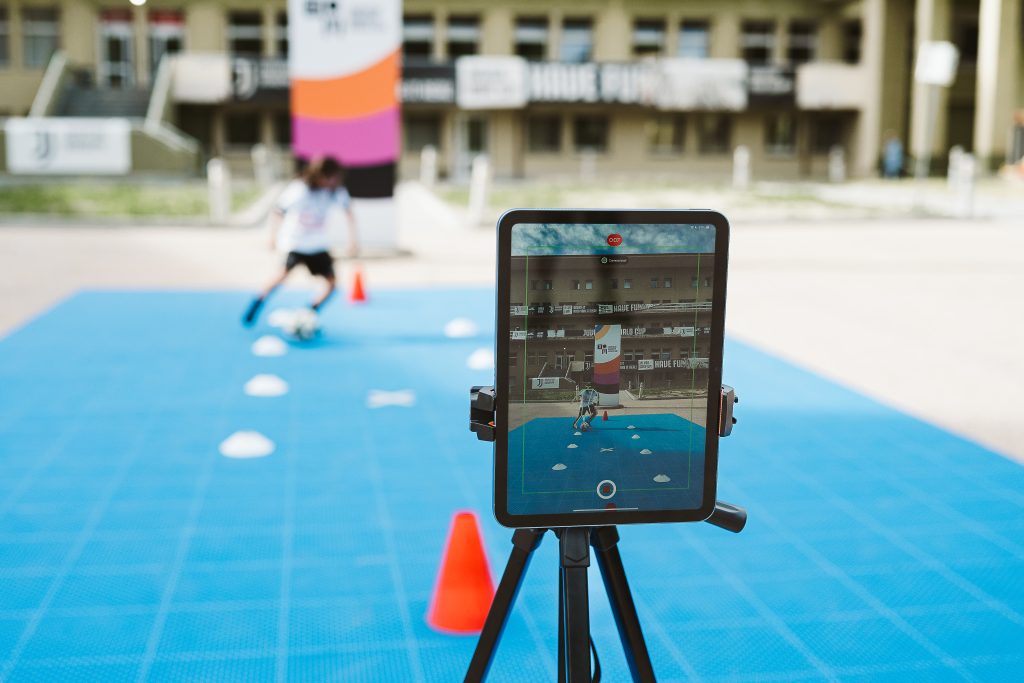
The IMG partnership follows the University of Tampa’s early adoption in 2024. LSU football uses Valor to assess injured players as they rehabilitate and return to play.
Several other top-tier universities also use the platform to optimize athletic potential and mitigate injury risks. Valor is also expanding its global footprint, recently securing a contract with Italian soccer powerhouse Juventus.
The startup’s founders, Magnusson, William Kodamam and Dhyey Parikh, former classmates at the University of Virginia, began building Valor in 2021. Magnusson noted that the goal was to “analyze biomechanics in a very quick and easy way.”
“Back in 2021 it was a little less quick and easy because we were focused on sensors,” he explained. “It was like 10 sensors that you put around your body.”
While the data was accurate, the hardware proved cumbersome for practitioners. Continuously engineering physical components was also cost-prohibitive.
In 2024, rapid advancements in artificial intelligence enabled Valor to transition entirely to computer vision. The shift eliminated the need for wearable hardware and drastically reduced development costs.
“The University of Tampa actually signed on with the sensors, so God bless them,” Magnusson said. “We quickly led them to start using the computer vision version. That was when we started demoing at IMG Academy.”
He noted that what once took 10 coders to build now requires one with Claude Max, Anthropic’s high-capacity AI subscription plan. “We were able to very quickly come up with a minimally viable product, a demo and begin showing people,” Magnusson said.
The platform operates on a standard iPad or iPhone mounted on a tripod. A practitioner records athletes performing specific movements, such as a single-leg squat, countermovement jump or full-speed sprint.
Within a minute, the system’s AI processes the video. The platform then flags left-to-right asymmetries, benchmarks the athlete against a proprietary dataset based on age and sport, and generates a targeted corrective exercise program.
“Speed coaches, they may want to look at how you accelerate,” Magnusson said. “That’s actually one of our newer features that we just released last week.”

He emphasized that the platform equally supports athletic development and injury mitigation, which are inextricably linked. For example, a high-performance car requires both rapid acceleration and strong brakes.
Magnusson also stressed that Valor is an “athlete-first” company. He said daily data-driven corrective exercises can significantly reduce the risk for players predisposed to specific injuries.
“There should be more athletes who don’t have their career cut short in college or high school due to an injury,” Magnusson elaborated. “And certainly not a stupid injury. Injuries are impossible to get rid of entirely, but we can at least shift it towards lowering the odds of preventable injuries.”
Magnusson highlighted how utilization can vary between developmental programs and professional teams. The software helps paid athletes address immediate, specific issues, while amateurs can extract broader, long-term value by using the platform to maximize performance.
Valor also increases accessibility. Many schools lack elite coaches, trainers and sports science technology found at well-funded institutions.
In addition, the platform allows athletes to view and understand their own biomechanical profiles independently. “You can put this all on someone’s iPhone and iPad and have AI walk you through what it means and what to do next,” Magnusson said.
“It’s just a huge opportunity to democratize.”