Tampa Bay’s commercial lending pipeline continues surging, despite persistent economic headwinds, as regional growth drives a competitive market grounded in relationship capital.
Many business owners seeking operational capital or expansion funding now face a more complicated path to a loan. Surging fuel prices and fluctuating interest rates have tightened margins, making balance sheets look less profitable to corporate underwriters.
Yet, according to Jose Bello, business development officer for ServisFirst Bank, the narrative of a stagnant local economy doesn’t align with what he sees on the ground. “I don’t feel that it’s as bad as we hear,” he said, without diminishing a financial pinch felt nationwide.
“We do see some businesses expanding and borrowing money,” Bello said. “We’ve got a big pipeline of business – big business, too – and it’s from all different sectors.”
A strategy shift can help secure that business in a competitive commercial lending landscape. While previous decades saw financial institutions racing to put a retail branch on every corner, the industry is increasingly driven by a lean banking model.
ServisFirst has achieved a 30% efficiency ratio, meaning the bank spends just 33 cents of every dollar it earns on operating expenses, largely by foregoing a heavy retail presence. Bello noted that branch operating costs can surpass $1 million annually, and institutions can redirect that capital into financial technology to offer more competitive lending terms.
But as digital banking capabilities become ubiquitous, Bello believes the true differentiator is an increasingly outdated concept – concierge service. “Just because you’re more efficient, you move faster, and you move with more technology, doesn’t mean it can’t be personal,” Bello said.
Bello recently found himself finishing a 10-hour day when a prospective client called with banking questions. Rather than scheduling a virtual or in-office meeting, he offered to stop by their house for an authentic conversation.
The “house call” may have extended Bello’s workday by two hours, but the return on investment was immediate. “I made him feel better,” he said.
“He had some questions and some concerns, but it was great,” Bello added. “Those last two hours really washed away or rejuvenated all that drain from the day.”
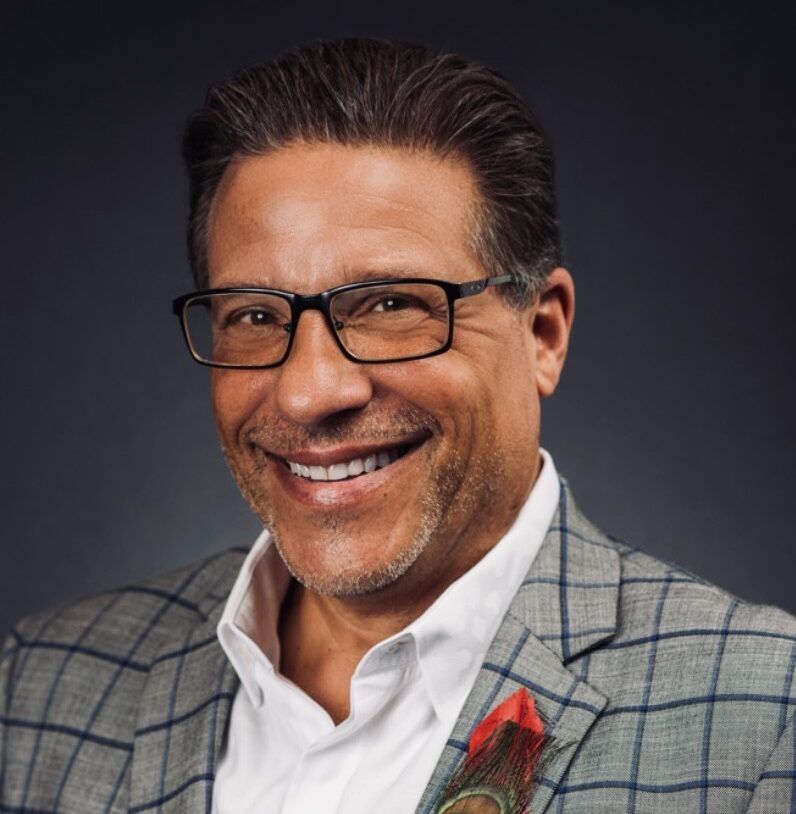
Bello said that level of personalization is critical for today’s business owners, who often need an advocate to guide their applications through the underwriting process. “It’s really the relationship, the person that makes a difference.”
“Unfortunate things happen to good people and good businesses,” Bello explained. “Going into the document collection for a deal is going to feel like a medical exam, except the only thing that tends to hurt is your ego. Everybody gets nervous when you show up with your hair on fire asking for money. So let’s have that conversation early.”
Those concerns underscore Bello’s mantra: “I’d rather be a year early than a day late.”
Bello said owner-occupied commercial real estate, specialized medical facilities and service-related businesses are among the primary regional drivers of commercial loan demand. Infrastructure initiatives are also fueling the pipeline.
While seemingly constant roadwork frustrates commuters, Bello said Florida Department of Transportation projects are quietly enriching the local economy. He noted that contractors are buying, leasing and renting heavy machinery, all of which require bankable transactions.
Hurricane recovery efforts continue supporting local homebuilders and tradespeople, Bello added. Expanding information technology companies, affordable housing projects and commercial redevelopments are also propelling the local lending market.
Conversely, Bello noted that banks are largely avoiding businesses in cash-intensive or highly volatile industries, such as cannabis and cryptocurrency, due to heightened regulatory risks.
Maintaining strict lending standards can also serve as a defensive measure in a state increasingly defined by consolidation. Credit unions, leveraging their federal income tax exemption, have aggressively acquired traditional banks across Florida.
DFCU announced Monday that it is acquiring Gulfside Bank, a Sarasota institution founded in 2018. That is the Michigan-based credit union’s fourth Florida deal since 2023.
Bello, however, remains unfazed by institutional restructuring. He believes that alignment and transparency with the local business community mitigate market shifts and competition.
“If I’m not the right fit for a client’s needs, I’ll do my best to connect them with someone I know and trust,” Bello said. “For me, while winning the business is important, it’s equally about helping people find the right solution. I take the time to really understand my clients’ businesses and growing alongside them.”