After an unprecedented 18-point jump in reading proficiency among 7,000 struggling high school students, Hillsborough County is expanding its performance-based partnership with education technology provider HMH.
The initiative addresses a chronic blind spot in public education – older students who slip through the cracks. For decades, districts have invested heavily in early childhood literacy, often leaving high school educators scrambling to support teens who still lack fundamental reading skills.
Tracie Bergman, assistant superintendent of curriculum and instruction for Hillsborough County Schools, said high school literacy gains had stagnated. District officials sought an intervention.
“We always focus heavily on primary grades, because it’s the foundation,” Bergman told the Tampa Bay Reporter. “When you look in the upper grades, it’s always like, well, what happens when it doesn’t stick?”
The district found a solution in HMH’s evidence-based Read 180 program, which provides teacher support, coaching and adaptive technology, and uses the latest research on literacy strategies to deliver targeted instruction.
“You can’t just take a K-2 phonics program and plop it up in high school,” Bergman said. “It has got to be one that’s really targeted for them, their age group and what they need.”
Hillsborough opted for a relatively unique outcome-based contract with Boston-based HMH. Under that model, vendors assume most of the financial risk.
Amy Dunkin, president of intervention solutions at HMH, said outcomes-based contracts are currently utilized in just six states. Roughly half of her firm’s total $1.2 million award hinged on Hillsborough students meeting predetermined literacy metrics.
“We know it works, so there’s no trepidation on our part,” Dunkin said of Read 180. “We know when we have the right conditions for implementation, those results are going to happen. There was no fear whatsoever, because really, what it does is create a very strong alignment out of the gate.”
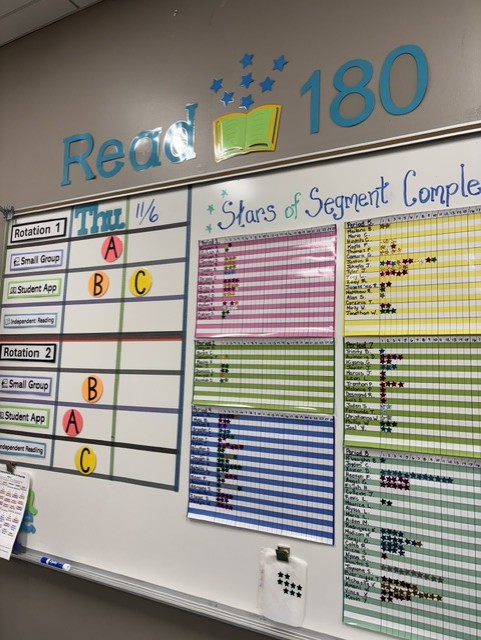
That alignment required a massive logistical lift. Changing a student’s literary trajectory doesn’t happen with software alone; it requires overhauling schedules, “double blocking” reading classes so students still receive core English instruction and ongoing teacher coaching, Bergman explained.
She presented high school principals with a rigid framework. The district offered to incorporate the Read 180 program, but only if administrators accepted a list of uncompromising demands.
“Here are our scheduling guidelines. Here are our non-negotiables, period,” Bergman recalled telling school leaders. “You must implement it with fidelity. You must welcome coaching … If you can’t commit to it, don’t do it.”
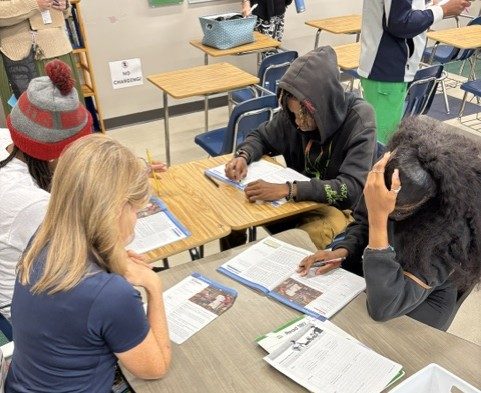
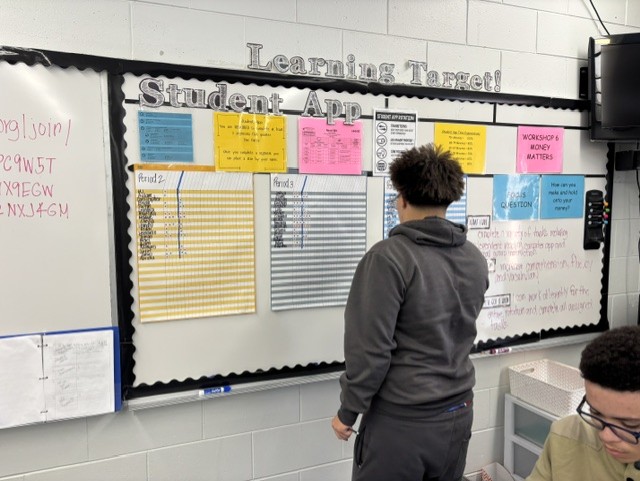
One of the 15 schools that initially expressed interest withdrew due to rigorous scheduling requirements. HMH then embedded coaches in classrooms alongside teachers trained on the program, while district and company leadership met weekly to review progress data and course-correct in real time.
Dunkin believes that level of operational buy-in separates Read 180 from screen-heavy educational platforms that fail to deliver systemic change. “This is not just about student success; it’s about teacher success,” she said.
The commitment paid unprecedented dividends, as the percentage of targeted students reading at a proficient level on the state’s assessment exam jumped from 5% to 23% over two years. Furthermore, 49% of the 7,000 participating students moved up a performance level within the year.
Dunkin called those increases “astounding” for any grade, but especially among high school students who have “struggled for a long time.”
“You don’t get that kind of growth just by one leader saying, ‘Here’s what we’re going to do.’ You get it from buy-in across your buildings, across classrooms and grade levels. I really hand it to them – they were so committed and so focused.”
That proof of concept has triggered an immediate expansion. The nation’s seventh-largest school district will now incorporate Read 180 into all of its high schools.
A new outcomes-based contract will bring the same framework to several middle schools in Hillsborough. Bergman believes the district can build on its success by focusing more on participants who are still struggling, and less on educator coaching and implementation.
While a 23% reading proficiency rate among targeted students might not seem impressive, Bergman emphasized that the starting point made an 18-point increase remarkable.
“It’s double-digit gains, which we don’t see very often, especially in high school,” she said.
Bergman noted that incorporating Read 180 into middle grades should raise student baselines before they reach high school. The compounding effects of starting the program earlier could increase district-wide graduation rates.
“This isn’t a ship you turn on a dime… and these kids didn’t get here overnight,” Dunkin said. “It really is an intentional focus, and to me, those are the best partners.”