For the first time since 1999, the underutilized Port of St. Petersburg has a decades-long vision outlining plans for additional marine industry, research and recreational uses.
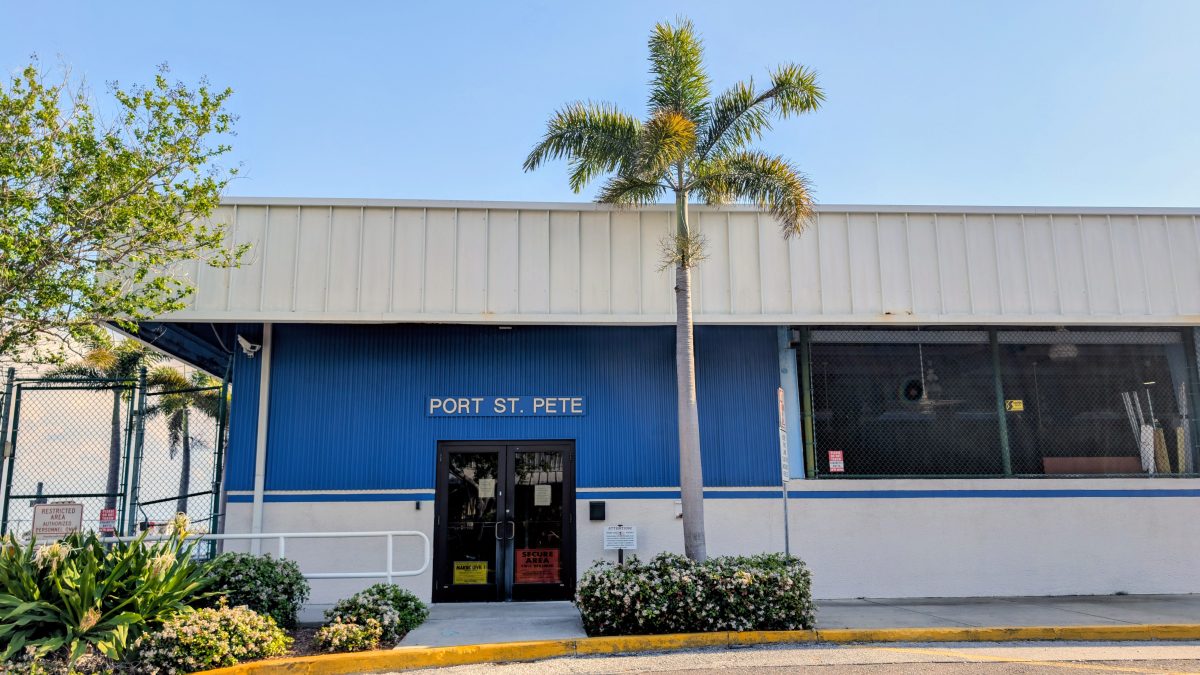
City Council members unanimously approved a new master plan for the 4.4-acre facility near the University of South Florida St. Petersburg on Thursday. The federally regulated deepwater port, one of 15 in Florida, has long been a discrete economic driver along Bayboro Harbor.
David Wirth, who manages the city’s marina and port facilities, said the overarching goal was to identify new economic opportunities and prioritize operational improvements. The over 400-page blueprint includes an estimated $93 million to $163 million in potential enhancements over the next 10 to 20 years.
“We want a port that remains operationally relevant but contributes to the blue economy, supports innovation and maintains a symbiotic relationship with the city’s waterfront,” Wirth said.
The updated master plan also positions the port to receive grant funding from the Florida Department of Transportation (FDOT). “We’re not big by any means … but we’re still an important economic driver for the state and the city,” Wirth said.
City officials decided to take a long-overdue look at that port’s trajectory in January 2023. The ensuing process “included a lot of assessments, case studies, planning concepts, market insights, stakeholder input and implementation strategies,” Wirth explained.
He emphasized that the city is not obligated to build everything in the expansive document, compiled by consultancy firm Moffat & Nichols. The proposals are conceptual, and each project will require additional studies, financing and approvals.
Wirth said the “flexible, actionable plan” will guide the port’s future as “market conditions, technologies and community needs evolve.”
After considering stakeholder feedback, the city narrowed its focus to three priority areas: expanding the adjacent Maritime and Defense Technology Hub, exploring marine maintenance and repair facilities and enhancing the port’s boutique cruise ship operation.
The St. Petersburg Innovation District operates the hub, which opened in 2022 and occupies a 32,000-square-foot, city-owned building that shares a surface parking lot with the port. Wirth underscored the need to balance public access at the port with current and future maritime operations.
The hub is home to dozens of marine-focused businesses and researchers. Alison Barlow, CEO of the Innovation District, called it a “great example of how St. Pete has been able to transform the port area into an economic engine.”
Barlow noted the hub has also attracted interest from the National Oceanic and Atmospheric Administration (NOAA), the U.S. Coast Guard, the Department of Defense and international partners. She and several stakeholders hope to build a 50,000-square-foot sister facility next door.
Previously known as Hub 2, the Center for Coastal Resilience would provide additional waterfront access for marine research and industry. “That’s a critical need,” Barlow said.
The master plan earmarks space for a marine maintenance, repair and overhaul area adjacent to the Hub. Those facilities would feature a much-needed crane capable of lifting research vessels and heavy equipment in and out of the water.
Wirth highlighted a “very ambitious” 600-foot extension to the 1,200-foot wharf near the USFSP campus to enhance cruise operations. American Cruise Lines, now in its fourth year at the port, offers seasonal trips to destinations along Florida’s Gulf Coast and the Keys.
“The concept considers passenger arrivals, terminal operations, ground transportation, security and that access could be organized more effectively,” Wirth said. “The intent here is to create a functional gateway that supports cruise activity that remains sensitive to the port’s limited size and location.”
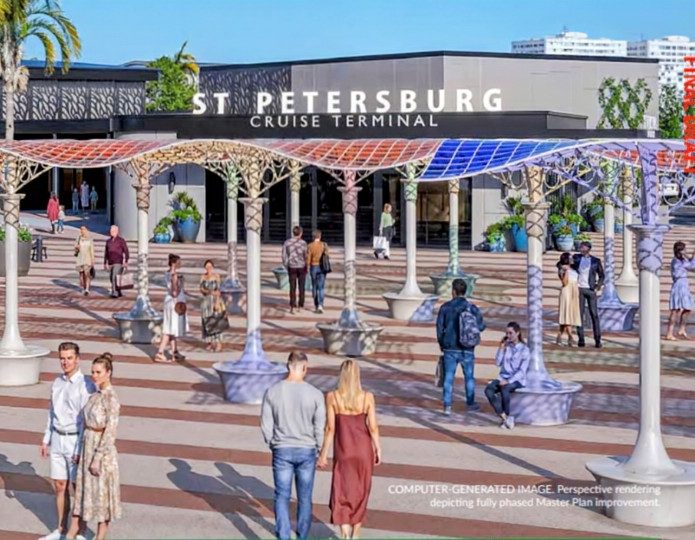
American has expressed interest in partnering with the city on a new passenger terminal and pier extension to support additional voyages. “I love seeing that part of this plan,” said Councilmember Gina Driscoll.
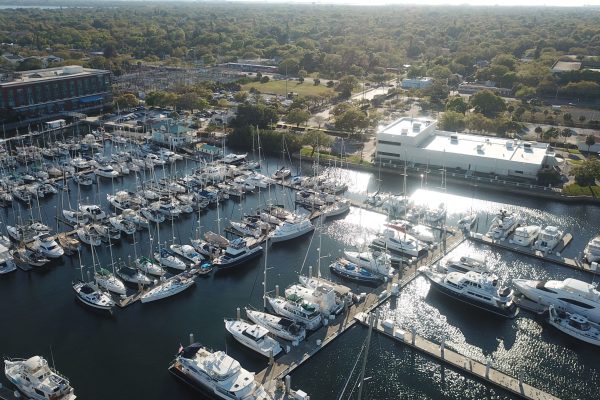
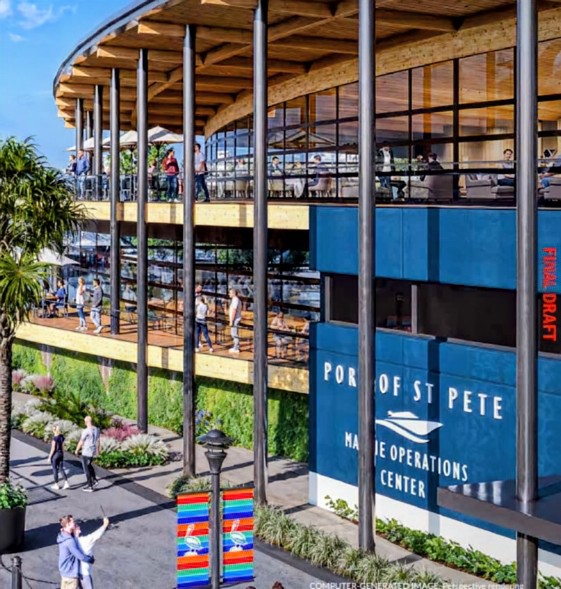
Driscoll, however, expressed concern with illustrations showing recreational boating facilities and a yacht marina surrounding the hub. “We are certainly not trying to turn the port into a playground,” she said.
Wirth reiterated that the illustrations are “completely conceptual” and developed before plans for the hub’s expansion advanced. Revising the images would have exceeded the master planning budget, partially funded through an FDOT grant, he said.
Council Chair Lisset Hanewicz noted that the estimated cost of proposed projects will inevitably increase over the next 10 to 20 years. The price tag, significantly lower than the initial $150 million to $270 million estimate, does not incorporate design, permitting and utility upgrade expenses.
The approximately $30 million hub expansion will not require any city subsidies. With said officials would seek grants and public-private partnerships to offset other costs.
Jason Mathis, CEO of St. Petersburg Downtown Partnership, said the “thoughtfully constructed” master plan “makes a ton of sense.”
“We’ve got this beautiful, discreet little port that we haven’t always activated in the best possible way, the maximum way, for economic development,” Mathis added. “This takes us to the next level.”