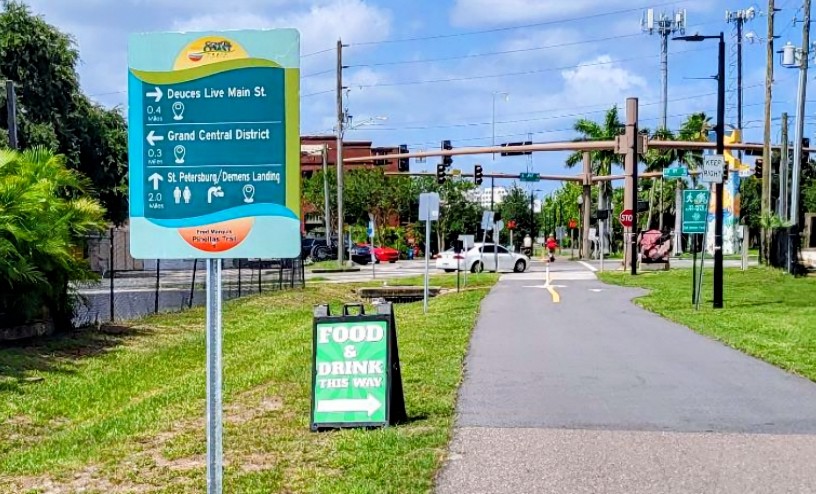
Local business owners and advocates believe transforming St. Petersburg’s section of the Pinellas Trail into an economic and cultural driver hinges on a critical, yet unrealized alignment of public and private priorities.
Urban Land Institute Tampa Bay hosted a discussion on the trail’s future on Oct. 22. The event follows St. Petersburg joining Dunedin as a Florida Trail Town.
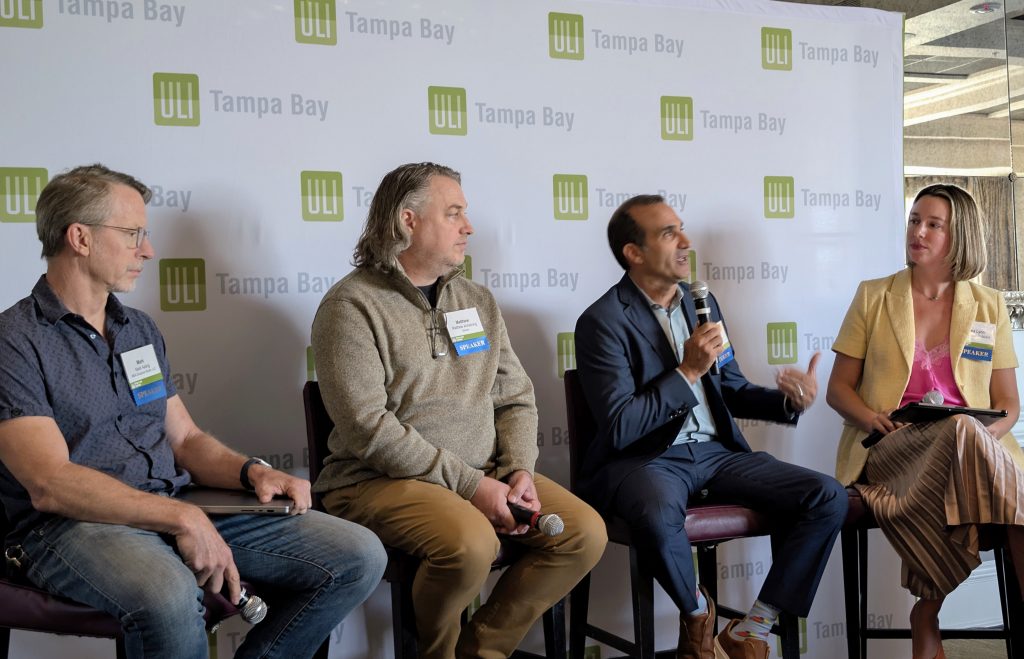
Tara Lynn Hubbard, coalition lead for The Sunline, moderated a panel of stakeholders, including John Barkett, co-founder of Friends of Trails Crossing; Mark Aeling, owner of MGA Sculpture Studio; and Matthew Armstrong, president of the St. Petersburg Distillery.
“Our Trail Town designation unlocks a lot for us,” said Barkett. “We have the attention of the state, and it allows us to go after federal dollars for a lot of these initiatives.”
The Pinellas Trail Loop is a 47-mile multi-use pathway spanning from Tarpon Springs to St. Petersburg. Built along an abandoned railroad corridor, the trail provides a unique space for walking, jogging, skating and biking.
For decades, St. Petersburg’s section has served primarily as an oft-neglected recreational path. Now, as adjacent land develops, stakeholders believe it should be treated as a transportation and economic artery, requiring a modernized regulatory framework and public-private investment.
Barkett, also managing partner at Ascension Real Estate Partners, pointed to Modera, a 20-story apartment tower that bookends the downtown trail segment, as a successful proof of concept. The project replaced an old, privately owned covered rail spur that historically bifurcated the trail and deterred pedestrian use.
Development firm Mill Creek Residential purposefully designed the building and its ground-floor retail to face the trail. Its lobby leads directly into the corridor.
“We all see the trail as something more,” Barkett said. “We see the trail as really this economic on-ramp or economic driver where we can spur trail-oriented development and that whole live, work, play [environment].”
Modera, however, has downtown zoning, which allows the highest development intensity. Many underutilized sites farther west, throughout and beyond the Warehouse Arts District, lack that luxury.
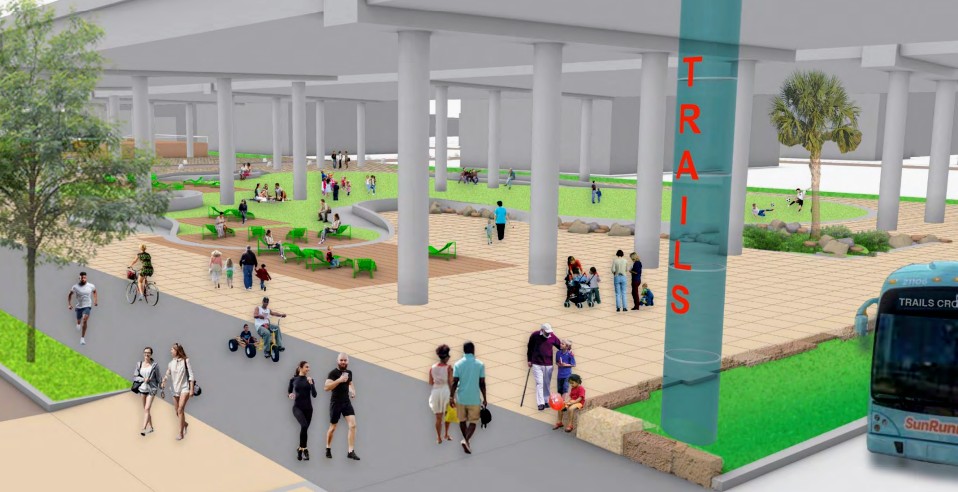
Multiple panelists noted that while the city has taken steps to encourage trail-oriented development, the regulatory environment lags behind the private sector’s vision. Since 2021, Barkett has led efforts to create Trails Crossing, which would transform an underutilized, under-interstate stretch of the Pinellas Trail into a vibrant public gathering place.
City officials have yet to approve a municipally mandated master plan.
“We’ve got a lot of trail stuff happening and culminating right now,” Barkett said. “It’s just a matter of pushing it through and finalizing and actually activating some of the stuff that has been kicking around for decades.”
Aeling, also board chair for the Warehouse Arts District Association, highlighted a Target Employment Center (TEC) overlay, approved in September 2024, as a step in the right zoning direction. The designation requires new construction along specific trail segments to include direct access and allows zero-foot setbacks.
Stakeholders believe those and several other changes, like reduced parking requirements, will increase housing, employment and commercial opportunities around the trail. Hubbard, however, noted that Aeling and others have yet to take advantage of the overlay, which doesn’t extend past the arts district.
Aeling wants to build a mixed-use project along the trail with much-needed affordable housing for artists. While the TEC overlay has made the project possible, he and other stakeholders are “trying to gain an understanding of what we can and can’t do.”
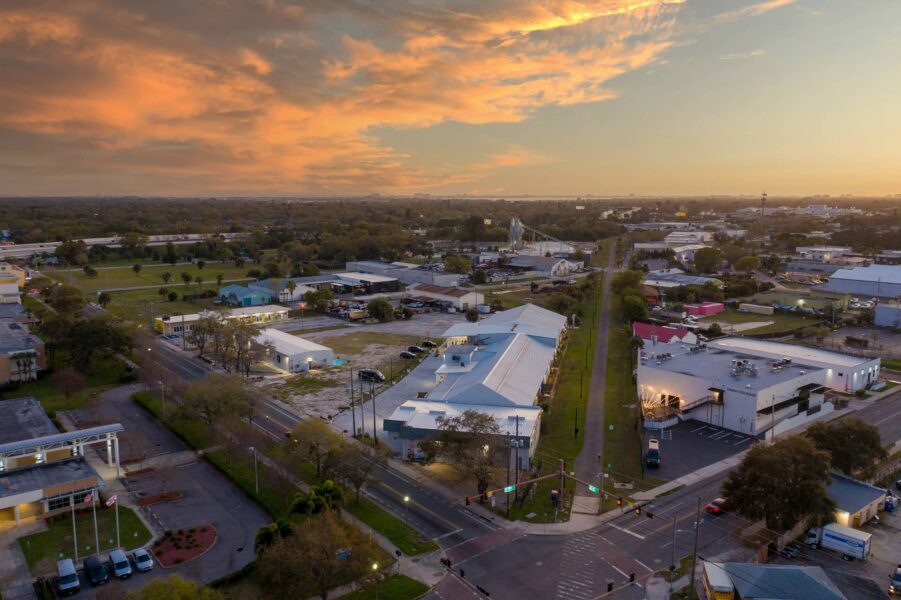
Armstrong emphasized that public-private partnerships are the only path forward for long-overdue infrastructure improvements. The distillery, which operates on 28 acres with a quarter-mile of trail frontage, is currently planning a mixed-use “Makers District.”
Roughly a third of the property would remain green space, Armstrong said. The district would feature housing, microindustrial uses and highlight local entrepreneurs.
Hubbard noted that the overarching goal is to create parks, public art and “intentional third spaces” along the trail. She asked how stakeholders can also keep the “places and people who made this corridor facing in the first place?”
Armstrong advocated for public-private partnerships and a memorandum of understanding between developers and the city. “It’s not going to happen, certainly in our lifetimes, unless that investment happens,” he said.
“As long as we have all the rules figured out, development can come in and say, ‘All right, in exchange for this … we’re going to contribute toward that. We’re going to help fix that section of infrastructure,’” Armstrong added. “We have to set up, right now, the mechanism for the public-private partnership. I don’t feel like it’s there yet.”
Safety also remains a concern for local stakeholders. The panelists warned that a 12-foot-wide strip of asphalt is inadequate for the volume and variety of trail traffic.
“Right now, we’ve got electric bikes that are going up to 40 miles an hour, and the idea of somebody walking onto that trail through a trail-facing development where a sidewalk butts right into that trail … These are real safety considerations,” Aeling said. “In all likelihood, the trail is going to become a major source of egress. The city, country and entire planet is moving away from vehicles.”
Aeling advocated for separate walking and biking lanes and an educational component that outlines the “rules for egress engagement.” The panel ultimately agreed that transforming the trail into a safe, vibrant cultural and economic driver will require the city and stakeholders to align priorities and pacing.
For the first time, St. Petersburg will host the annual Florida Greenways and Trails Summit on Nov. 9 and 10. The panelists hope the statewide spotlight will help catalyze necessary partnerships.