
Despite billions spent fortifying corporate networks, a former military intelligence operative believes that the cybersecurity industry is fighting a losing battle at the digital front door.
Bryson Bort, founder and CEO of St. Petersburg-based cybersecurity firm SCYTHE, spent years running classified operations for the U.S. intelligence community. His teams consistently bypassed the defenses of highly sophisticated targets globally.
“We always won, and I wondered, when I went into the commercial world, why was that the case?” Bort said of his counterterrorism efforts. “So I wanted to come up with a really simple model to explain it.”
He realized a fundamental flaw in enterprise security: a psychological obsession with keeping hackers out, rather than neutralizing the threat before it causes any harm.
“The dirty secret of cybersecurity is, your defense is not really technical,” Bort explained. “It’s technical to inform people to do something and make decisions.”
Bort said mean time to response (MTTR) is the true indicator of an organization’s resilience. The cybersecurity industry, however, typically remains fixated on the perimeter.
To illustrate the industry’s strategic error, Bort compares cyber warfare to a Hollywood heist caper. The first phase is reconnaissance, and organizations cannot control who is watching their network or what public information they gather.
The second phase – the break-in – is where corporations spend the bulk of their budgets, which Bort argues is a psychological trap. “The reality is a determined thief is going to break in, no matter what,” he said.
“Whether you spend a lot of money or a little money, I’m still going to break in,” Bort continued. “The question is, do you really need your own private moat with sharks with laser beams on their heads protecting you?”
The critical vulnerability lies in the third phase: what happens after the breach. Once inside, attackers are confined to the host network’s parameters, Bort said.
“You’re operating on my territory in the real world,” he added. “Those are my computers. They don’t just do anything. They only do the things I want them to do. So, you’re constrained to playing in my sandbox, and defenders just need to be focused on that sandbox.”
That realization eventually led to the creation of industrial cybersecurity unicorn SCYTHE. After retiring from the military, Bort, a Battle Captain and Brigade Engineer Officer in Operation Iraqi Freedom, first launched an “offensive consultancy” firm.
“People pay us to break their shit,” Bort said of GRIMM Cyber. “We were a specialized hacker consultancy.”
Target experienced a major data breach during the 2013 holiday season. The retail conglomerate subsequently sought to test its newly fortified security network against realistic threats.
Bort said the breach “created all of the budget for cybersecurity that you see today.” Target built a world-class security system.
“Whether you spend a lot of money on cybersecurity or a little, you’re still going to get hacked,” Bort reiterated. “In fact, it’s even harder to understand how good your defense is because you made it so good.”
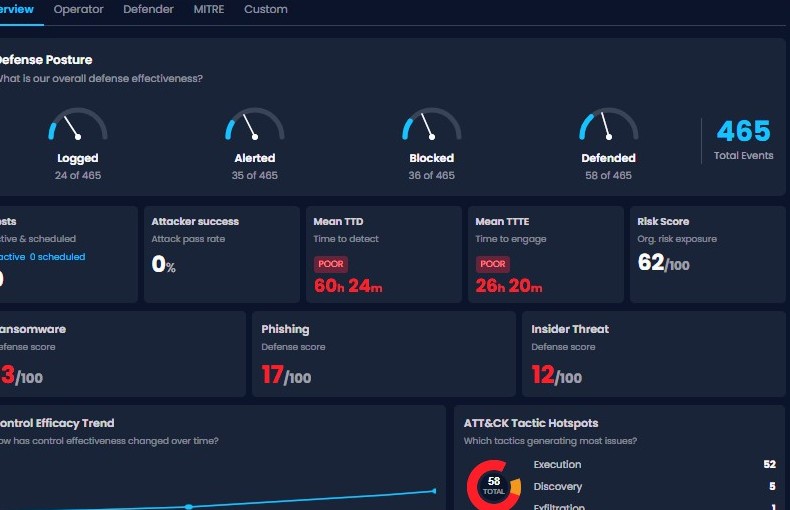
He said Target requested a “custom weapon.” Bort raised $3 million and launched SCYTHE in 2018.
The firm specializes in adversarial exposure validation. According to its website, the platform identifies “what your controls catch before AI-enabled attackers find out what they don’t.”
Bort outlined four distinct threats shaping the current geopolitical cybersecurity landscape. Iranian actors are rapidly attacking vulnerable domestic targets, including dozens of water systems across several states.
Russian intelligence has essentially co-opted Eastern European organized crime, Bort said, using lucrative ransomware attacks on American targets to fund operations. North Korea operates as a state-sponsored crime syndicate, deploying hackers to steal digital and fiat currency to support its isolated regime.
Bort said the most strategic threat, however, comes from China, which has deeply infiltrated critical infrastructure in the U.S. Those acting on behalf of the communist nation have planted “essential time bombs waiting for a future moment.”
Bort dismissed the current panic over artificial intelligence. “AI has yet to have created anything novel,” he said.
“All AI has done is take what has already been human-led and just been able to scale it faster.”
AI-driven breaches still require months of noisy, mistake-prone activity inside a network, which properly configured security operations should catch long before data is compromised, Bort explained.
He relocated from Washington, D.C., to St. Petersburg four years ago to continue growing SCYTHE. Bort credits the area’s robust university network, significant defense presence and status as a burgeoning financial hub for creating rich talent and client pools.
“Finance – they make money coming or going. They have budgets for small countries for cybersecurity, so they really invest heavily,” Bort said. “All of that together has created this special opportunity for Tampa Bay to really be a leader in cybersecurity.”
Bort said his company, which previously raised $23 million, is now focused on automating the defense process. SCYTHE is developing Security Operations Center (SOC) validation tools that not only identify network gaps but automatically generate and deploy necessary fixes, effectively closing the loop on enterprise security.